
Adromischus alstonii
Adromischus alstonii
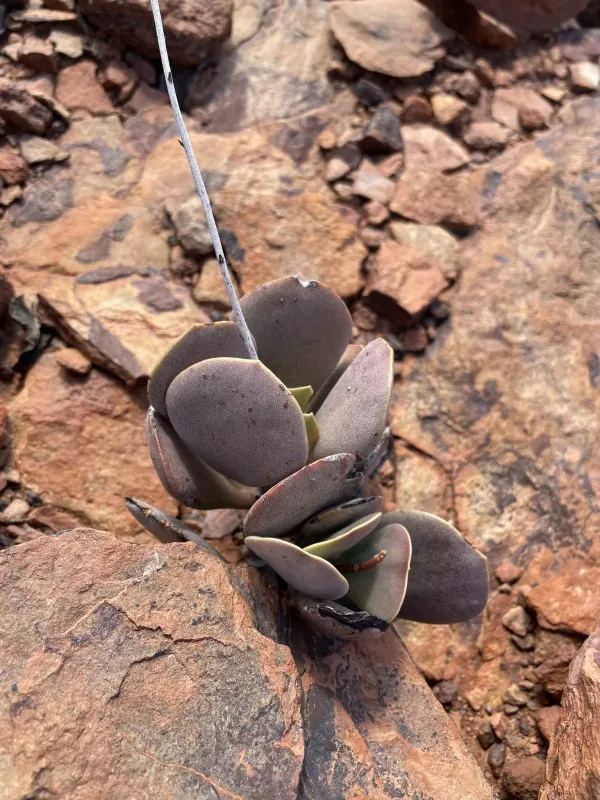
Description
Growing requirements
Adromischus alstonii is a distinctive perennial succulent within the Crassulaceae family, native to the arid landscapes of South Africa. It is highly valued by collectors for its thick, textured, and often spotted leaves that form a compact, low-growing clump.
The plant exhibits remarkable adaptation to harsh environmental conditions, featuring fine hairs on its foliage that serve as a natural shield against excessive heat and solar radiation. This succulent is slow-growing, making it an ideal candidate for limited spaces in indoor gardening.
Successful cultivation requires intense but indirect sunlight, as direct afternoon sun can scorch the foliage. It thrives in temperatures between 22 and 28 degrees Celsius during the growing season, while a cooler, dry winter period is essential for plant health.
The substrate must be extremely well-draining, consisting of a mix of grit, pumice, and a minimal amount of organic potting soil. It is crucial to avoid rich, moisture-retaining soils that could compromise the health of the delicate root system.
Watering should be performed using the "soak and dry" method, ensuring the soil is completely dry before adding any moisture. In winter, the frequency of irrigation should be significantly reduced to allow the plant to enter a state of dormancy.
Main diseases and pests
The most significant threat to Adromischus alstonii is fungal rot caused by poor air circulation and excessive moisture. Overwatering quickly leads to tissue decay, which is often irreversible if the root system becomes damaged.
Pests such as mealybugs often hide in the tight leaf clusters, making them difficult to spot in the early stages. Regular inspection and the use of insecticidal soap or specific pesticides are recommended to keep the plant free from infestation.