
Adonidia merrillii
Adonidia merrillii
Description
Growing requirements
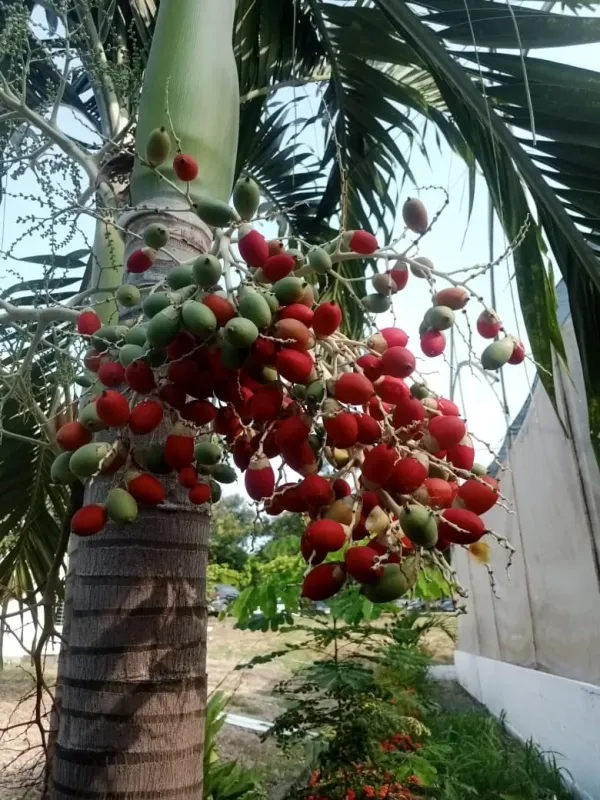
Adonidia merrillii, commonly known as the Christmas Palm, is a member of the Arecaceae family. It is native to the Philippines and is widely cultivated in tropical regions for its striking appearance and relatively compact size compared to other palm species.
The tree features a single, slender, grey trunk with prominent leaf scars. It is highly valued in horticulture because it produces large, bright red fruit clusters that ripen during the winter season, resembling festive decorations.
For optimal growth, this species requires a location with full sun exposure. While it can survive in partial shade, prolonged lack of sunlight results in weaker growth and a less dense canopy, diminishing its ornamental value.
Soil requirements include well-drained, fertile substrates. It does not tolerate waterlogged conditions, which can lead to rapid root degradation. A slightly acidic to neutral pH level is ideal for nutrient absorption.
Watering should be consistent during the growing season to ensure healthy foliage. However, it is essential to allow the surface soil to dry out between watering intervals to prevent the onset of fungal issues in the root zone.
Main diseases and pests
Mealybugs are a frequent pest for Adonidia merrillii, often nesting in the tight spaces between leaf bases. They suck plant sap, leading to stunted growth and the appearance of sooty mold on the foliage.
Scales are another common threat that attaches to the stems and undersides of leaves. Their presence can be identified by small, hard bumps; control is best achieved through systemic insecticides or horticultural oils.
Ganoderma butt rot is a severe and often fatal fungal disease that affects many palm species. Prevention is key, as there is no effective cure; it is spread primarily through infected tools or soil contact.
Nutritional deficiencies, specifically potassium or magnesium deficiency, frequently manifest as yellowing or spotting on the fronds. Regular fertilization with palm-specific slow-release fertilizers is the primary preventative measure.
Leaf spot diseases caused by various fungi can occur in high-humidity environments. Improving airflow around the canopy and avoiding overhead watering during cooler periods can significantly reduce the risk of infection.