
Adenium somalense
Adenium somalense
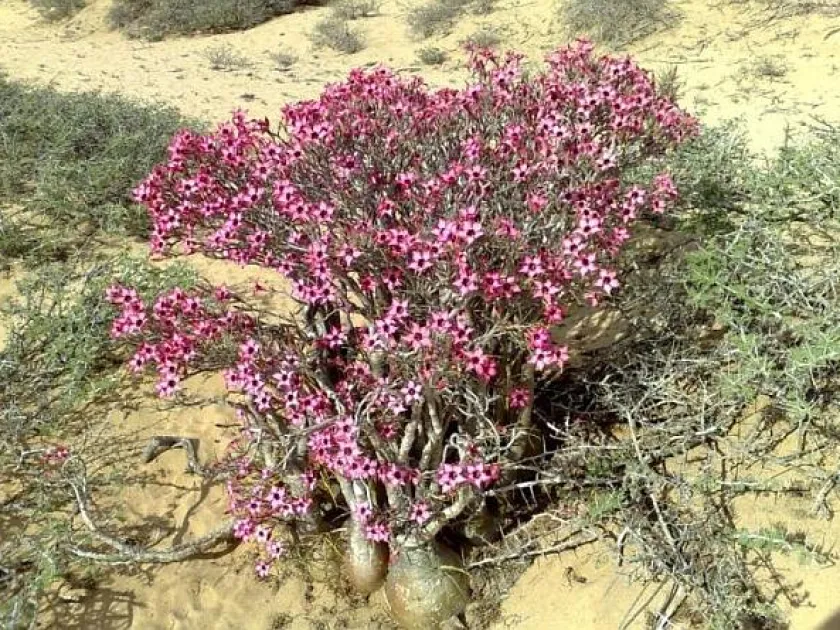
Description
Sowing dates
Propagation of Adenium somalense via seeds is best performed during the spring months to maximize the available sunlight for early seedling growth.
Seeds should be soaked in a mild fungicide solution for approximately one hour before planting to minimize the risk of damping-off disease.
A sterile, well-draining substrate composed of coco coir, perlite, and fine pumice provides the ideal environment for the developing taproot.
Maintaining a constant temperature between 25 °C and 30 °C is essential for high germination rates of this specific variety.
Using a greenhouse propagator with supplemental ventilation helps prevent fungal outbreaks during the crucial first weeks after germination.
Growing requirements
Adenium somalense is a striking succulent belonging to the Apocynaceae family, native to the arid landscapes of Somalia and eastern Kenya.
This species is highly valued for its massive, tapered caudex and ability to thrive in extremely dry, hot conditions with minimal soil volume.
In terms of horticulture, it requires full sun exposure to maintain its compact growth habit and to induce the production of its signature trumpet-shaped flowers.
The growing medium must be highly porous; common additives include crushed volcanic rock or gravel to ensure rapid water drainage after each irrigation.
During the winter dormancy period, the plant should be kept almost completely dry and at temperatures above 12 °C to avoid fatal root rot.
Main diseases and pests
The primary threat to Adenium somalense is root rot, which typically develops when plants are watered during low-light or cool climate conditions.
Spider mites are the most persistent pest threat, especially in hot, dry environments, as they frequently target the tender new growth of the plant.
Mealybugs can also infest the plant, hiding in the junctions of the stems, requiring systemic insecticides or manual removal with alcohol-soaked swabs.
Regular sanitation of the growing area and adequate airflow around the caudex are the best preventive measures against various fungal pathogens.
Any signs of leaf yellowing or mushiness at the base of the plant should be investigated immediately, as they often signal underlying water management issues.