
Adenium socotranum
Adenium socotranum
Description
Growing requirements
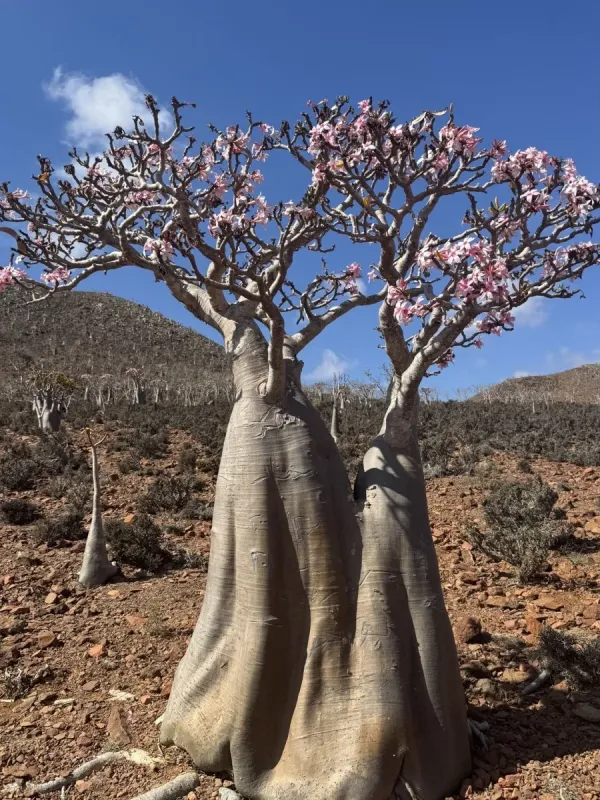
Adenium socotranum is a unique species of the Apocynaceae family, native to the island of Socotra. Known for its massive, woody caudex, it is considered one of the most robust and slow-growing representatives of the genus, resembling a miniature tropical tree.
This species requires a highly specific microclimate characterized by intense sunlight and high heat. In an agronomic context, it demands full sun exposure throughout the year to maintain its structural integrity and encourage the development of its distinctive, thickened stem base.
The soil requirements are strict: the medium must be highly porous and inorganic. A mixture of pumice, coarse sand, and a minimal amount of organic matter is ideal. The primary goal is to ensure that water passes through the pot instantly, preventing any stagnant moisture around the roots.
Agricultural management during the active season involves careful monitoring of irrigation. The plant must be watered thoroughly only when the substrate is completely dry. During the winter dormancy period, irrigation should be almost entirely suspended to simulate the natural dry season of its origin.
Nutrient management is critical for the development of the plant. A balanced, low-nitrogen fertilizer is recommended to promote root and caudex health rather than excessive vegetative growth, which can make the plant vulnerable to collapse in non-natural environments.
Main diseases and pests
Root rot is the most devastating pathology for Adenium socotranum. It is almost exclusively caused by overwatering or poorly aerated substrate, leading to the rapid decay of the caudex tissues and subsequent plant death.
Spider mites are the most persistent pests, thriving in the warm and dry conditions required by the plant. They cause significant leaf damage, which reduces the photosynthetic capacity of the plant and slows down its already conservative growth rate.
Mealybugs are another common threat, often hidden in the crevices of the branches. They sap the plant's vitality and secrete honeydew, which can subsequently attract sooty mold, further compromising the aesthetic and physical health of the succulent.
Scale insects can attach themselves to the woody parts of the stem. Due to the plant's slow metabolism, these pests can cause long-term damage to the epidermis if not treated promptly with systemic insecticides or mechanical removal.
Preventive measures include regular inspection of the crown and the base. Ensuring optimal airflow around the plant helps mitigate the risk of opportunistic fungal infections, which are more common during periods of high humidity or low temperature.