
Adenium multiflorum
Adenium multiflorum
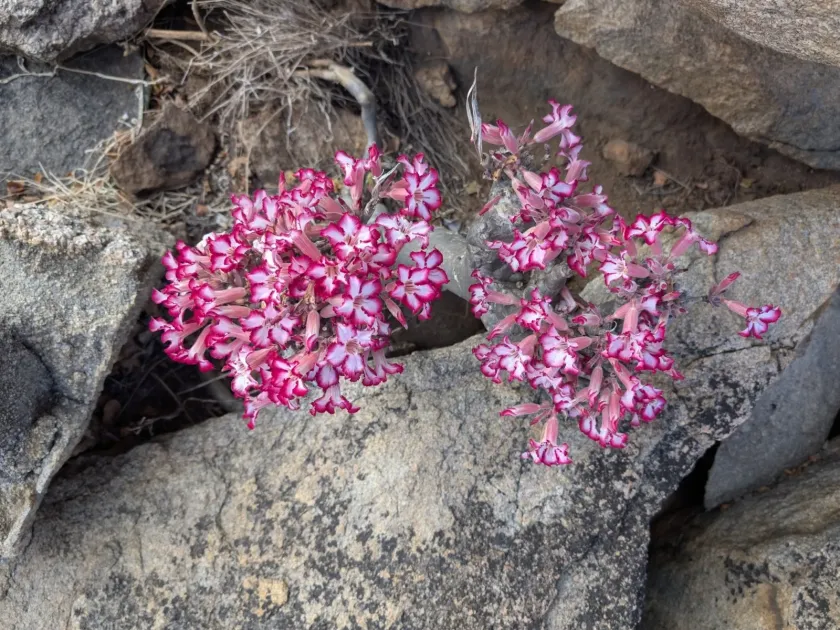
Description
Sowing dates
Propagation of Adenium multiflorum is best achieved through seeds, which helps in developing the signature swollen base known as the caudex. Seeds should be sown in spring when temperatures are consistently warm, ensuring optimal germination rates for this heat-loving species.
It is recommended to soak the seeds in a mild fungicide solution before planting to prevent fungal infections during the sensitive germination process. A well-draining, sterile mix of perlite and coconut coir provides the perfect medium for seedling development.
Covering the seed tray with plastic wrap creates the necessary humidity, while placing the container in a warm spot or on a heat mat will accelerate the emergence of sprouts. Typically, seedlings appear within one to two weeks if conditions are maintained correctly.
Once seedlings have developed their first true leaves, they should be gradually acclimated to lower humidity levels and provided with bright light. Careful handling is required as the plant tissue contains toxic sap, necessitating the use of gloves during all cultivation tasks.
Cuttings are an alternative propagation method, although plants grown from cuttings generally fail to produce the aesthetic bulbous stem characteristic of seed-grown plants. If using cuttings, let them air-dry for several days to callus before placing them in soil.
Growing requirements
Adenium multiflorum thrives in bright, direct sunlight, making it an ideal candidate for greenhouse or south-facing window cultivation. Lack of sufficient light results in leggy, weak growth and prevents the plant from producing its spectacular, multi-colored flowers.
The soil must be exceptionally porous to allow for rapid drainage, as this plant is highly susceptible to root rot. A standard succulent potting mix, amended with coarse sand, pumice, or gravel, is essential for keeping the root system healthy and oxygenated.
Watering requires careful management; the substrate should be allowed to dry out completely between waterings. During the winter dormancy period, watering should be significantly reduced or stopped entirely to reflect the plant’s natural cycle in its native southern Africa.
Optimal growth occurs at temperatures between 25 and 30 degrees Celsius. The plant cannot tolerate frost, and even short exposure to temperatures below 10 degrees Celsius can cause severe tissue damage and lead to plant death.
Fertilization should occur primarily during the active growing season using a balanced, low-nitrogen fertilizer. Potassium and phosphorus are particularly beneficial for promoting strong stem structure and enhancing the vibrant display of blooms.
Main diseases and pests
Pests such as spider mites and mealybugs are the most common adversaries for Adenium multiflorum. These insects tend to colonize the plant during dry spells, feeding on sap and leading to stunted development or yellowing foliage if left untreated.
Root and stem rot are the primary health threats, usually caused by overwatering or soil that lacks proper aeration. If the caudex becomes soft or mushy to the touch, immediate intervention is required to save the specimen by removing rotten parts.
Integrated pest management, including the use of systemic insecticides and neem oil, is effective for controlling outbreaks. Regular physical inspections of the leaf axils and the undersides of leaves are necessary to detect infestations before they escalate.
To reduce the risk of disease, ensure that the plant is grown in an area with excellent air circulation. Stagnant air combined with high humidity often serves as a catalyst for fungal pathogens that affect the health of the entire plant.
- Keep the growing area clean of organic debris.
- Use systemic treatments for persistent infestations.
- Always sanitize pruning tools before and after use.