
Adenium dhofarense
Adenium dhofarense
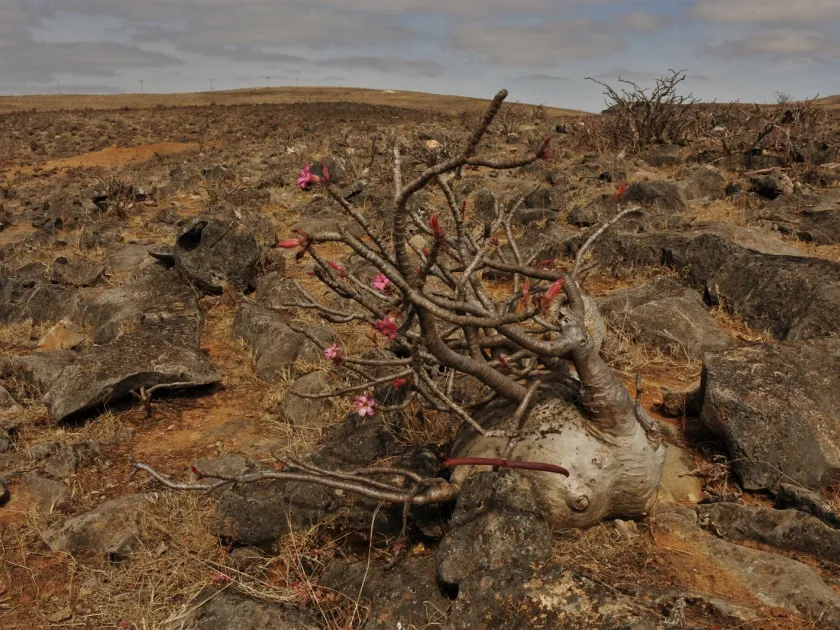
Description
Growing requirements
Adenium dhofarense is a rare species belonging to the Apocynaceae family, native to the Dhofar region of Oman, where it thrives in harsh, rocky desert landscapes.
As a succulent, it is biologically adapted to store water in its thick, tuberous stem, known as a caudex, allowing it to withstand prolonged periods of extreme heat and drought.
Successful cultivation requires a highly porous and inorganic soil mix, typically consisting of pumice, perlite, and coarse sand to ensure rapid drainage and soil aeration.
This species is a light-demanding crop; it requires full, intense sunlight to maintain its compact growth form and to support the development of its characteristic swollen base.
During the growing season, watering should be performed only when the soil is completely dry, whereas in the dormant winter season, water intake should be significantly reduced.
Main diseases and pests
The most critical threat to the survival of Adenium dhofarense is root rot, which is almost exclusively caused by overwatering or poor drainage in the container.
Pests such as spider mites and mealybugs represent a recurring problem, especially in indoor environments where the air may be stagnant or overly dry.
If left untreated, these pests can cause significant damage to the epidermis of the caudex and leaves, weakening the plant and potentially leading to fungal infections.
Regular monitoring for signs of infestation or rot is essential; affected plants should be treated with appropriate systemic insecticides or fungicides immediately.
To prevent disease outbreaks, it is vital to maintain good sanitation practices, including the removal of dead leaves and ensuring that pots are not overcrowded on the bench.