
Round-leaved poison bush
Acokanthera rotundata
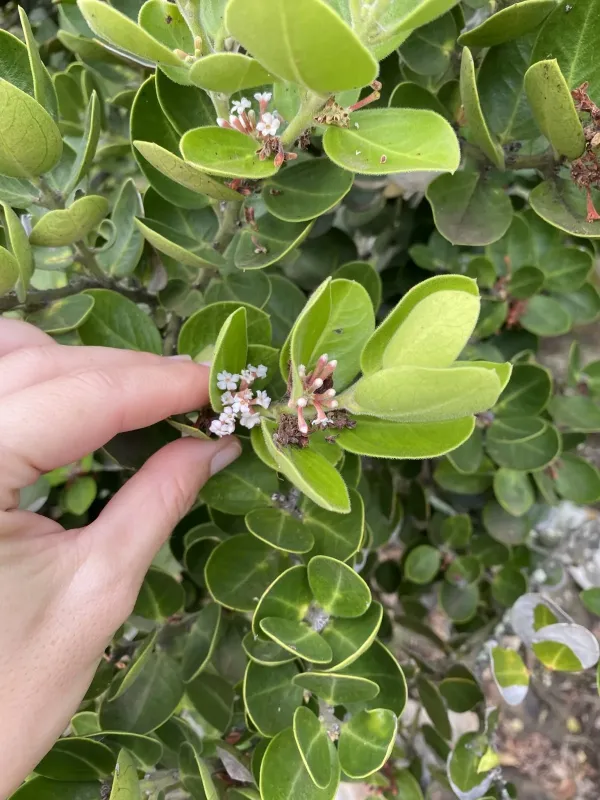
Description
Growing requirements
Acokanthera rotundata, commonly known as the round-leaved poison bush, is a robust evergreen shrub belonging to the Apocynaceae family. Native to the rocky landscapes of Southern Africa, this plant has adapted to withstand dry spells and nutrient-poor substrates.
The plant requires significant light exposure to maintain its dense foliage and typically thrives in full sun or light shade. It is not cold-hardy, and in regions with temperate climates, it is predominantly cultivated in containers that can be moved indoors during winter.
Soil requirements focus primarily on drainage. The species does not tolerate "wet feet," and therefore, a potting mix enriched with coarse sand or pumice is highly recommended to prevent root suffocation.
Watering frequency should be adjusted seasonally; the plant benefits from a light drying-out phase between waterings. Fertilization with a balanced liquid fertilizer during the growing season supports the development of its leathery leaves.
While primarily of botanical and historical interest due to its traditional use, the species serves as an ornamental specimen in collections, provided its toxic nature is respected by gardeners and landscape managers.
Main diseases and pests
Like many plants in its family, Acokanthera rotundata is prone to common indoor and greenhouse pests, specifically scale insects and spider mites. These pests thrive in dry air, so maintaining moderate humidity around the canopy is a preventative measure.
Root rot remains the most serious threat, usually occurring due to overwatering or lack of sufficient soil aeration. If signs of yellowing leaves or wilting appear, the moisture levels must be evaluated immediately to prevent total plant loss.
The plant is highly toxic due to its cardiac glycoside content, which serves as a natural defense mechanism against herbivores. Direct contact with sap must be avoided, as it can cause significant skin irritation and allergic reactions.
Sanitation practices are vital; always clean pruning tools with alcohol after use to prevent potential pathogen transmission. Removing dead or damaged branches helps maintain structural integrity and reduces the risk of local fungal outbreaks.
While few diseases plague this plant, it requires consistent management to prevent neglect, which is the primary cause of decline in ornamental specimens.