
Zeyheria montana
Zeyheria montana
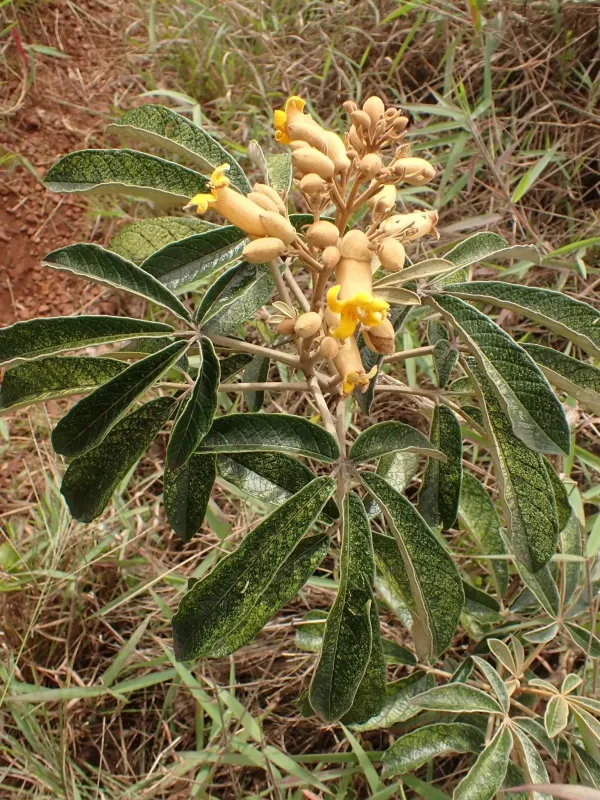
Description
Sowing dates
Seeds of Zeyheria montana are typically sown in nurseries shortly after the rainy season ends to take advantage of optimal soil temperatures for germination. In its natural range, reproduction is mainly achieved via seeds, which demonstrate high viability under stable conditions.
To improve germination rates, seeds should be soaked in warm water for several hours before planting. They are planted at a shallow depth of 1-2 centimeters, maintaining consistent moisture levels in the substrate until the seedlings emerge.
Seedlings are transplanted to their permanent locations once they reach a height of 30-40 centimeters. The most favorable time for planting is at the beginning of the rainy season, allowing the root system to establish before the onset of the dry period.
Planting density is determined by the specific land-use goals; for reforestation, spacing between 2 and 3 meters is common. This density promotes the development of a straight trunk and rapid canopy closure to shade out competitive weeds.
Consistent watering during the first two years of the tree's life is critical for successful establishment. Once the plant develops a robust taproot system, it exhibits increased drought tolerance and requires minimal irrigation.
Growing requirements
Zeyheria montana, a member of the Bignoniaceae family, is a deciduous tree naturally adapted to the tropical environments of Brazil. It thrives in well-drained sandy or loamy soils with slightly acidic to neutral pH levels.
This species is highly photophilous and sensitive to shading, especially during its early developmental stages. Excessive shade from surrounding vegetation or overcrowding can severely stunt growth and lower the tree's overall vigor.
The optimal temperature range for development is between 20 and 30 degrees Celsius. While the tree can withstand short periods of drought, prolonged water scarcity may cause premature leaf shedding as a natural defense mechanism.
The soil should be rich in organic matter, although the tree is known for its ability to reclaim degraded lands. Its presence contributes significantly to soil restoration in its natural habitat of the Cerrado.
In its native environment, the tree is accustomed to seasonal fluctuations, demonstrating high resilience against intense solar radiation and wind, which are characteristic of open savannah-like landscapes.
Yield
The primary economic value of Zeyheria montana lies in its high-quality timber, which is prized for its density, resistance to rot, and attractive grain. Its growth rate is moderate, allowing for predictable timber rotation cycles.
The tree also produces a significant quantity of seeds, which are utilized for reforestation projects and botanical research. Each mature specimen produces many fruit capsules containing winged seeds.
In agroforestry systems, Zeyheria serves as an effective soil enhancer; its annual leaf drop significantly enriches the soil with organic nutrients. The biomass yield per hectare is considered quite high for this genus.
Timber from this species is highly valued in construction and furniture making due to its durability. It is particularly suitable for structures exposed to moist or ground-contact conditions.
To maximize timber quality, young trees require sanitary and formative pruning. This management practice prevents the formation of knots and minimizes the development of fungal pockets at branch junctions.
Main diseases and pests
The primary threat to the health of Zeyheria montana is fungal infection of the root system, typically caused by waterlogged or poorly drained soils. Constant soil moisture promotes root rot, which can be fatal to the tree.
Leaf-eating insects are the most common pests, particularly during the active spring growth phase. Severe defoliation reduces the tree's photosynthetic capacity, significantly slowing its maturation and overall development.
In certain regions, wood-boring insects may infiltrate the bark and trunk, weakening the tree's structural integrity. These infestations often open the door for secondary infections, such as wood decay fungi.
Poor agricultural practices, such as planting on heavy clay soils without proper drainage, are the leading cause of pathogen spread. Prevention primarily relies on site selection and maintaining proper spacing to ensure adequate airflow.
Pest and disease management in plantations involves integrated monitoring and the use of eco-friendly biological controls, which help maintain the balance of the ecosystem while protecting the timber crop.