
Zataria multiflora
Zataria multiflora Boiss.
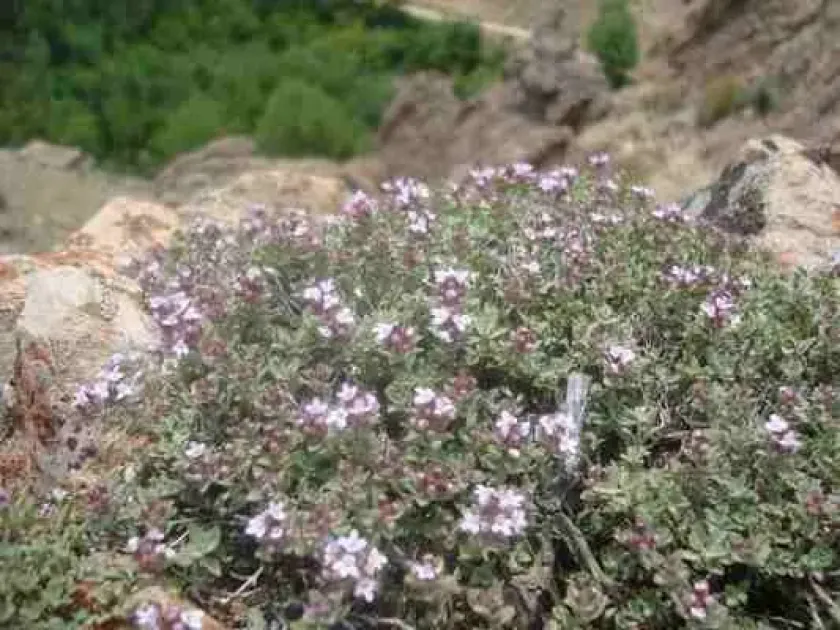
Description
Sowing dates
Zataria multiflora is a perennial subshrub, and as such, seed propagation requires the preparation of seedlings in protected environments. Sowing should be carried out in late winter or early spring so that the plants are ready for field transplanting as soon as stable warm weather arrives.
Seeds should be sown at a depth of no more than 0.5–1 cm due to their small size. It is crucial to maintain consistent substrate moisture during germination, as the seedlings are highly sensitive to drying out of the topsoil layer.
Once two pairs of true leaves emerge, the seedlings should be pricked out to encourage the development of a robust root system. Hardening off the seedlings before transplanting into open ground is an essential step to increase survival rates in natural field conditions.
The planting pattern depends on the soil type and available machinery, but a standard approach involves a spacing of 30–40 cm between bushes. Row spacing should be at least 60 cm to ensure adequate airflow and ventilation for the plantings.
Direct sowing in the field is only feasible in regions with long growing seasons and mild climates, provided that regular drip irrigation is available during the early stages of plant development.
Growing requirements
Zataria multiflora, belonging to the Lamiaceae family, is native to the arid regions of Iran, Pakistan, and Afghanistan. It demonstrates high tolerance to the extreme temperatures and moisture deficits typical of these arid zones.
Successful growth requires well-drained, light-textured soils with a neutral to slightly alkaline pH. Waterlogging is a critical factor, as it triggers root neck rot and can lead to the total loss of the crop.
Light intensity is the key driver for essential oil accumulation; therefore, cultivation sites must be as open as possible and free from shading. Intense solar radiation enhances the aromatic properties of the leaves.
The crop has low winter hardiness, so cultivation in regions with harsh winters requires the use of shelters or greenhouse production. The optimal temperature range for vegetation is between 20 and 30 degrees Celsius.
Mineral nutrition must be balanced with an emphasis on potassium fertilizers, which strengthen the plant's immune system and promote better hardening of the shoots before the dormant period.
Yield
The productivity of Zataria multiflora depends directly on the age of the plantation and the intensity of management. By the second year after planting, the bushes reach full development, allowing for full biomass harvesting for industrial processing.
The primary value lies in the aerial parts of the plant — leaves and inflorescences, which contain thymol and carvacrol. Essential oil yield varies depending on the growth stage, with peak concentrations observed during the full flowering phase.
When agricultural best practices are followed, the yield of dry green mass can reach significant volumes, making the crop highly promising for the pharmaceutical and food processing industries.
The use of modern agricultural techniques, such as drip irrigation, allows for stable yields even in years characterized by significant natural precipitation deficits.
Regular pruning stimulates bush branching, which increases the number of growing points and, consequently, improves the overall productivity per unit area throughout the growing season.
Main diseases and pests
Zataria multiflora possesses strong phytoncidal properties that repel many pests; however, it remains vulnerable to fungal infections under conditions of excessive soil and air humidity.
Root rot caused by pathogens such as Pythium or Phytophthora is the main threat in poorly drained soils. Prevention consists of strict control over irrigation regimes and avoiding saturation of the root zone.
Leaf spots may appear if plant density is too high and air circulation is poor. In such cases, phytosanitary thinning of plantations and the use of eco-friendly fungicides are recommended.
Regarding insect pests, spider mites may occasionally appear during periods of extreme heat and drought. The use of biological insecticides effectively manages pest populations without compromising the quality of the essential oils.
Weeds pose a serious threat to the crop during its first year of life; therefore, effective weed control is an essential practice for the successful establishment of young bushes.
Harvesting
Harvesting is performed during the full flowering stage, when the concentration of essential oils in the plant tissues reaches its peak. Shoots are cut using sharp tools at a height of about 10–15 cm above the soil surface.
It is important to avoid harvesting in damp weather or early in the morning before the dew has evaporated, as excess moisture on the plant surface complicates the drying process and promotes spoilage.
Drying of the harvested material must take place in shaded, well-ventilated rooms or in specialized dryers at temperatures not exceeding 40 degrees to preserve the volatile components of the essential oils.
After drying, threshing is performed to separate the leaves from the woody stems, followed by sorting and cleaning to obtain a high-quality product in demand as a spice.
The dried product should be stored in airtight containers in a cool, dark place, which ensures the preservation of the original aroma and beneficial properties of the zataria for an extended period.