
Wunderlichia insignis
Wunderlichia insignis
Description
Growing requirements
Wunderlichia insignis is a remarkable species belonging to the Asteraceae family, native to the diverse and rugged landscapes of Brazil. Specifically, it thrives in the unique ecosystem of the Brazilian cerrado and rocky highland formations where it has adapted to harsh environmental conditions.
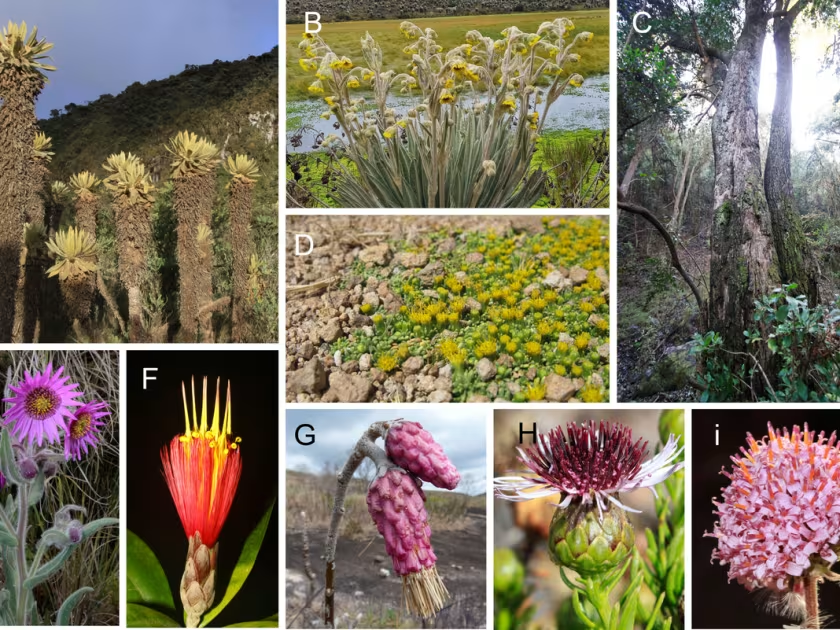
From a botanical standpoint, this plant exhibits a distinct pachycaul habit, often appearing as a small, woody, pillar-like tree. Its leaves are typically clustered in a terminal rosette, a common adaptation among plants that need to optimize solar exposure while minimizing water loss in arid environments.
Cultivation of this species requires a deep understanding of its natural soil preferences, which consist of highly porous, acidic, and rocky substrates. Providing excellent drainage is the most critical factor for successful growth, as the root system is highly susceptible to rot in stagnant, water-logged soil conditions.
The climate requirements for Wunderlichia insignis involve a distinct seasonality with sufficient sunlight and moderate ambient temperatures. It is not suitable for high-humidity, low-light environments, and therefore, climate control in greenhouse settings must be precise to mimic the mountain conditions of its habitat.
While not a traditional agricultural crop, the plant holds significant value in botanical research and specialized ornamental horticulture. Efforts are often made to preserve its germplasm due to its status as an interesting, albeit niche, representative of the Asteraceae family's structural diversity.