
Wolffiopsis welwitschii
Wolffiopsis welwitschii
Description
Sowing dates
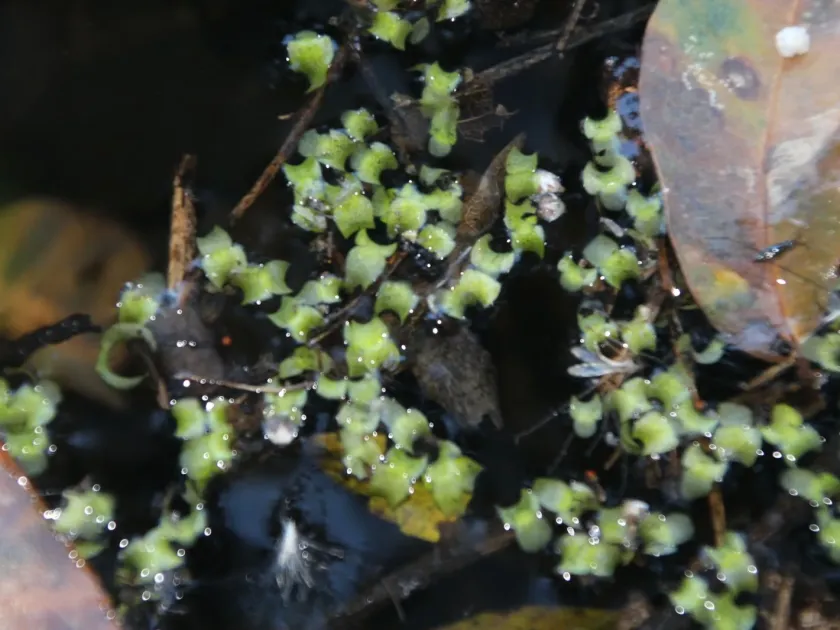
Wolffiopsis welwitschii is a rootless aquatic plant that propagates primarily through vegetative budding, forming dense green colonies on water surfaces.
The planting process involves introducing a healthy inoculum into a nutrient-rich water body, allowing the colony to colonize the area rapidly.
Because it lacks complex structures like stems or leaves, the plant consists entirely of microscopic green fronds that multiply through asexual division.
Sowing should be performed when ambient temperatures ensure that the water temperature remains within the plant's optimal range for growth.
Maintaining a balanced starting density is crucial to ensure that the culture covers the surface efficiently without exhausting the nutrient supply early on.
Growing requirements
As a member of the Araceae family, this species requires stagnant or slow-moving water bodies with high concentrations of dissolved organic nutrients.
Thermal stability is a mandatory requirement, as the plant thrives best in tropical climates with water temperatures ranging between 20 and 30 degrees Celsius.
The plant demands high levels of indirect solar radiation, as direct, extreme sunlight can heat the water surface and damage the delicate colony structure.
The chemical profile of the water should be maintained at a neutral to slightly alkaline pH to support active metabolic processes and cell division.
Regular monitoring of water quality is essential, as the plant is sensitive to heavy metal accumulation but highly effective at removing excess nitrogen.
Yield
The yield potential of Wolffiopsis welwitschii is among the highest in the plant kingdom, driven by its rapid growth rate under optimized conditions.
Harvestable biomass can double in volume in just a few days, making it an extremely productive crop for high-density aquatic farming systems.
The harvested plant material is rich in essential amino acids and vitamins, positioning it as an ideal nutritional supplement for livestock and fish feed.
In addition to agricultural feed, the crop is valued for its role in bioremediation, as it efficiently strips nitrate and phosphate pollutants from water.
Effective management of nutrients and water flow can significantly boost annual yields, turning stagnant ponds into highly productive agricultural sites.
Main diseases and pests
The primary agricultural threat involves competition from invasive microalgae or cyanobacteria that can outcompete the crop for light and available nutrients.
Pathogenic fungi and bacteria may cause decay within the colony if water circulation is insufficient or if organic matter levels become too excessive.
Various aquatic invertebrates can act as pests, although their impact is usually localized and rarely threatens the overall viability of the aquatic crop.
Sudden environmental shifts, particularly cold snaps or severe pH fluctuations, can lead to widespread chlorosis and rapid collapse of the population.
Inadequate sanitation in the cultivation environment can facilitate the spread of diseases, making regular water testing a critical management step.
Harvesting
Harvesting is typically performed using mechanical skimming techniques, utilizing fine-mesh nets to lift the floating biomass from the water surface.
Post-harvest processing includes rinsing the biomass to remove impurities and subsequent dehydration to improve shelf life and nutritional density.
Frequent harvesting is necessary to prevent colony overcrowding, which can otherwise trigger self-shading and senescence of the lower plant layers.
Modern commercial setups often use automated conveyor systems to streamline the collection of the plant, ensuring minimal human labor requirements.
The final product can be processed into pellets or frozen for long-term storage, maintaining its high protein content for various agricultural applications.