
Hippo grass
Vossia cuspidata
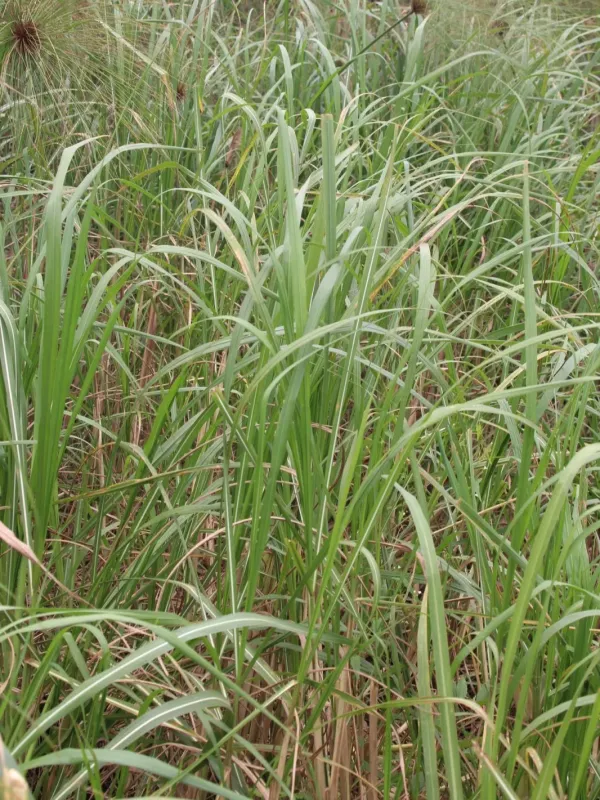
Description
Growing requirements
Hippo grass (Vossia cuspidata) is a robust perennial grass species belonging to the family Poaceae. It is native to tropical Africa and parts of Asia, where it predominantly grows in wetlands, floodplains, and along riverbanks.
The plant thrives in warm tropical climates, requiring consistent moisture and high temperatures for optimal vegetative development throughout the year.
Vossia cuspidata is well-adapted to aquatic environments, often forming large floating mats or anchoring itself into fertile, silty substrates with its strong rhizomatous root system.
The culms of this plant are thick and buoyant, allowing it to withstand seasonal flooding and variations in water levels characteristic of its natural habitat.
In agricultural practice, Hippo grass is primarily cultivated or managed as a valuable source of green fodder for livestock, providing high nutritional value under tropical conditions.
Main diseases and pests
Like many aquatic grasses, Hippo grass can be susceptible to stem-boring insects that penetrate the hollow culms, potentially reducing the overall quality of the harvestable biomass.
Fungal infections, encouraged by stagnant water and high humidity, may cause leaf spotting and decay if the stand density becomes too high for proper air circulation.
Competition from aggressive invasive aquatic weeds often poses a significant threat to Hippo grass populations, as these weeds can outcompete it for sunlight and nutrients.
Changes in water chemistry, including excessive salinity or pollution, significantly hinder the growth rates of the plant and decrease its palatability for livestock.
Effective management requires regular inspection of the stands to detect early signs of pest infestation or nutrient deficiencies before they impact forage production.