
Vilmorin's mountain ash
Sorbus vilmorinii C. K. Schneid.
Description
Growing requirements
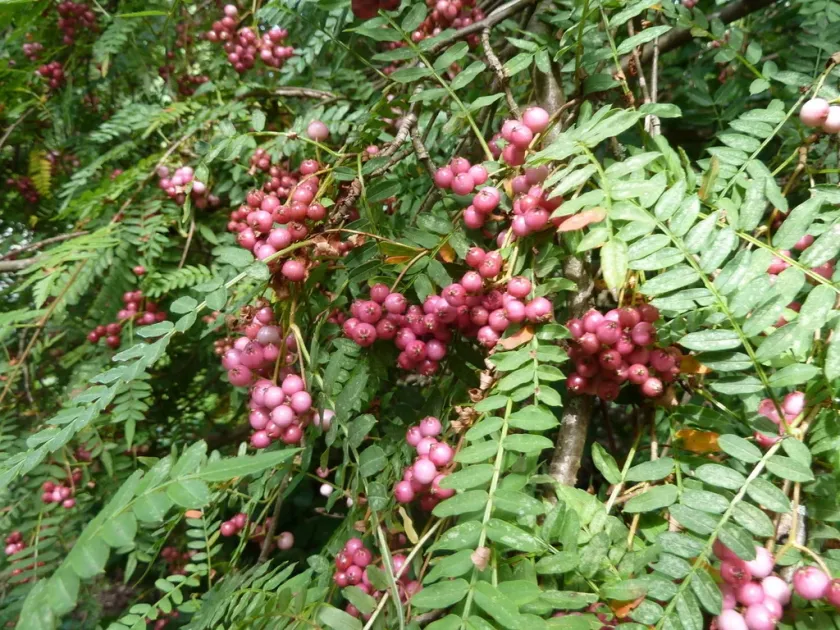
Vilmorin's mountain ash (Sorbus vilmorinii) is a deciduous ornamental tree belonging to the Rosaceae family. Native to western China, it is highly valued for its fern-like foliage and clusters of berries that transition from red to a delicate white or pale pink as they ripen.
This species thrives in well-drained, moderately fertile soil and prefers a sunny to partially shaded position. It adapts well to different soil types, provided that the drainage is efficient, as it does not tolerate waterlogged conditions which can lead to root issues.
The tree exhibits excellent hardiness, making it suitable for cool-temperate climates. Its slow growth rate and graceful, arching branches make it a perfect choice for small gardens, where it can provide seasonal interest without requiring excessive space or maintenance.
Cultural practices include providing consistent irrigation for newly planted specimens and applying a layer of organic mulch around the base to retain soil moisture. Annual pruning is typically limited to removing crossing or dead branches during the dormant season to maintain structural integrity.
Its primary use is in landscape design, serving as an eye-catching specimen tree or as a component in mixed shrub borders. The unique transition of fruit colors throughout autumn makes it one of the most aesthetically pleasing species within the Sorbus genus.
Main diseases and pests
The species can be susceptible to common Rosaceae pathogens such as fire blight and rust diseases. To mitigate these risks, it is essential to ensure proper air circulation through pruning and to avoid excessive nitrogen fertilization which encourages vulnerable succulent growth.
Insect pests such as aphids and sawflies may occasionally target the leaves. Early detection is key, and horticultural oils or approved insecticides can be applied if infestations are identified during routine garden inspections.