
Vestia lycioides
Vestia lycioides
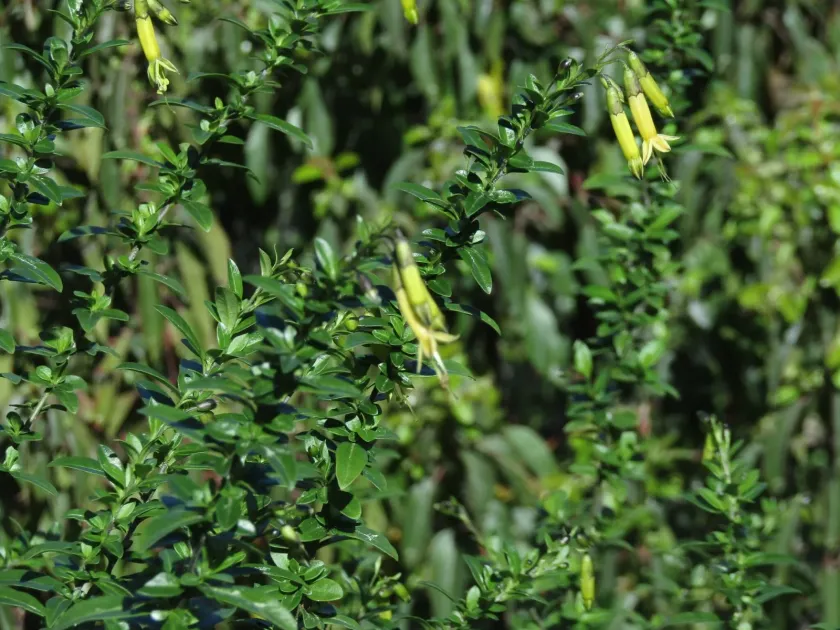
Description
Sowing dates
Propagation of Vestia lycioides is typically achieved through seeds or semi-hardwood cuttings. Seeds are sown in a light, well-draining substrate in early spring, requiring a consistent temperature of about 18–20 degrees Celsius to ensure successful germination.
When using cuttings, it is recommended to take semi-mature stems during the summer months. These cuttings should be rooted in a mixture of peat and sand under protective cover to maintain the high humidity levels necessary for root development.
Young plants should be transplanted outdoors only after the risk of frost has completely passed. The species requires a stable environment during its establishment phase to ensure long-term health and vigor of the root system.
Selecting a location sheltered from strong winds is crucial, as the slender stems of the Vestia shrub can be easily damaged. Proper site selection prevents physical breakage and promotes an upright growth habit.
For gardeners in cooler zones, container cultivation is the preferred method. This allows the plants to be moved into greenhouses or sheltered indoor spaces during winter, protecting them from temperatures that could be fatal.
Growing requirements
As a member of the Solanaceae family, Vestia lycioides requires fertile, well-draining soil with a neutral to slightly acidic pH. Poor drainage is the most common cause of failure, so incorporating perlite or coarse sand into the substrate is highly advised.
The plant thrives in bright, diffused light. While it enjoys a sunny position, providing partial shade during the intense heat of the afternoon will prevent leaf scorch and ensure the plant maintains a lush green appearance.
Consistent moisture is needed during the growing season, but the soil should be allowed to dry slightly between waterings. Overwatering is highly detrimental to the root system and must be avoided through disciplined irrigation management.
Native to Chile, Vestia is not frost-tolerant and requires protection during colder months. The ideal temperature range for active growth is between 15 and 25 degrees Celsius, as extremes can cause the plant to drop its leaves prematurely.
For optimal flowering, a balanced liquid fertilizer should be applied throughout the peak growing season. Focus on fertilizers with moderate phosphorus levels to encourage the development of the iconic yellow, tubular flowers.
Main diseases and pests
Common pests associated with this shrub include spider mites and aphids, particularly when the ambient air is dry. These insects congregate on the undersides of leaves and on developing buds, weakening the plant if left untreated.
Fungal diseases such as powdery mildew may develop if there is insufficient air circulation around the foliage. Ensuring that the shrub is not overcrowded and that the leaves remain dry during evening hours can significantly reduce this risk.
Root rot is a major threat in poorly drained soils or containers. Symptoms often include wilting despite moist soil, which indicates that the roots have been compromised by pathogens like Phytophthora or Pythium.
Regular maintenance, including the removal of dead or crossing branches, helps to improve plant vitality and lowers the risk of pest infestation. Using neem oil or specialized insecticidal soaps can manage pest populations effectively.
- Spider mites in dry conditions.
- Aphids attacking succulent new growth.
- Powdery mildew due to high humidity and low airflow.
- Root rot caused by stagnant water.
- Botrytis (grey mold) on decaying organic matter.