
Hairy-fruited blueberry
Vaccinium hirsutum
Description
Growing requirements
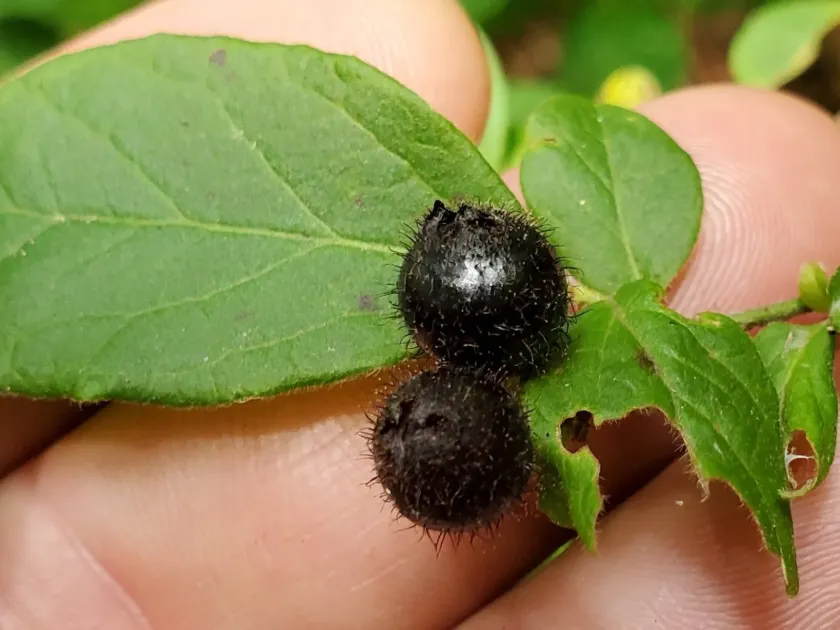
Vaccinium hirsutum, known as the hairy-fruited blueberry, is a distinct species within the Ericaceae family. It is easily identified by the fine, soft hairs that cover its leaves, stems, and berries, which serves as its primary botanical characteristic and differentiates it from common highbush blueberries.
Native to the southeastern United States, specifically the Appalachian region, this plant has adapted to thriving in high-altitude environments. It typically grows in mountainous areas, occupying habitats with acidic, nutrient-poor, but well-draining soils where other competing vegetation struggles.
Cultivation of this species requires strict adherence to soil pH requirements, which must remain within the acidic range of 4.5 to 5.5. The plant thrives in locations with partial shade to full sun, provided that the soil moisture levels are consistently maintained without becoming waterlogged.
Regarding agricultural practices, mulching is highly recommended to protect the shallow root system from temperature fluctuations and to suppress competitive weeds. Using organic materials like peat moss or pine bark needles helps maintain the acidity that the plant needs for optimal nutrient absorption.
The culinary and horticultural use of the hairy-fruited blueberry is expanding. Its unique texture makes it a curiosity for fruit enthusiasts, while its compact growth habit and foliage make it a suitable choice for ornamental landscapes that specialize in acid-loving flora and naturalistic garden designs.
Main diseases and pests
The primary threats to Vaccinium hirsutum include fungal diseases such as mummy berry and various leaf rusts, which are exacerbated by high humidity and poor air circulation. Effective management requires thinning out branches to ensure the canopy dries quickly after rain.
Pests such as blueberry maggots and scale insects can impact plant vigor and berry quality. Farmers typically employ integrated pest management strategies, focusing on biological controls and environmental modifications to keep plant stress low and pest populations below economic thresholds.