
Turpentine bush
Ericameria laricifolia (A. Gray) Shinners
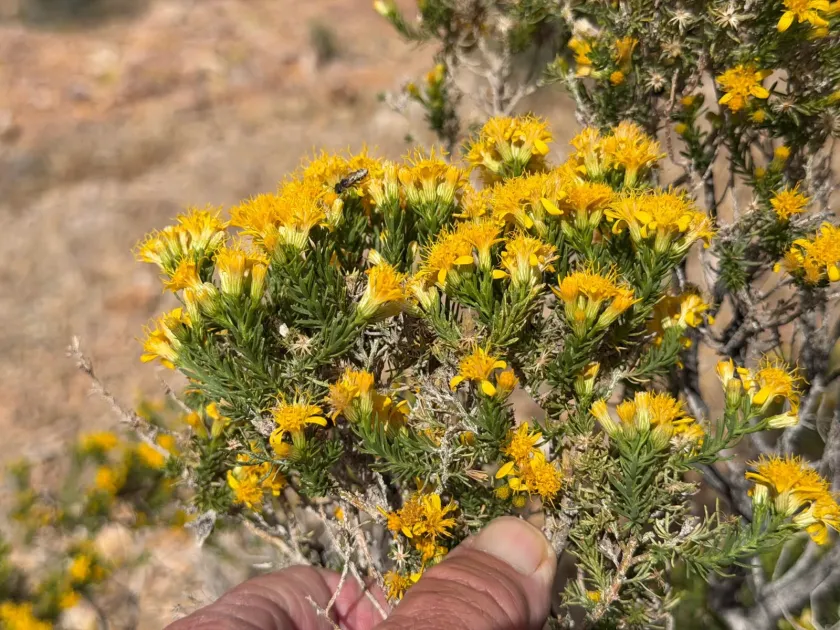
Description
Growing requirements
Turpentine bush (Ericameria laricifolia) is an evergreen shrub belonging to the Asteraceae family. It is named for the sticky, aromatic resin it produces and its needle-like leaves that resemble those of the larch tree.
Native to the southwestern United States and northern Mexico, this plant is well-adapted to high-desert environments. It naturally grows on rocky slopes and dry mountain sides where conditions are harsh and arid.
Successful cultivation requires full sun exposure and extremely well-draining soil. It is critical to avoid heavy clay or loam soils that retain moisture, as the plant thrives in gravelly or sandy, nutrient-poor substrates.
Agrotechnical management is minimal once the plant is established. It exhibits remarkable drought tolerance, requiring little to no supplemental irrigation even during peak summer heat, making it perfect for water-wise landscaping.
The plant is primarily used for ornamental purposes in xeriscaping. Due to its dense growth habit, it is also highly valued for soil stabilization and erosion control in arid environments where other vegetation fails.
Main diseases and pests
The most significant threat to the plant is root rot caused by poor soil drainage. If the root zone remains wet for extended periods, the plant quickly succumbs to fungal decay and decline.
Turpentine bush is naturally resistant to many common pests due to its high concentration of volatile resins and oils. This chemical defense mechanism provides a strong deterrent against generalist herbivores.
While pest pressure is generally low, aphids or spider mites may occasionally infest the plant under conditions of extreme stress or poor air circulation. These outbreaks are usually sporadic and localized.
Management of diseases is primarily focused on prevention through proper site selection and planting depth. Ensuring that the crown of the plant stays dry and well-ventilated is essential for long-term survival.
In cases of fungal infection, mechanical removal of affected branches is the recommended initial action. Chemical interventions are rarely necessary if the environmental requirements of the shrub are strictly met.