
Tripleurospermum tenuifolium
Tripleurospermum tenuifolium
Description
Sowing dates
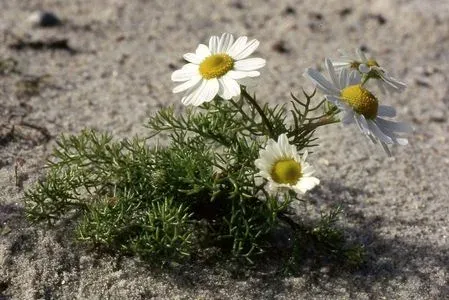
Tripleurospermum tenuifolium is a herbaceous plant belonging to the Asteraceae family. It is characterized by its finely dissected leaves and white flower heads, which are often valued for their pharmaceutical properties and botanical interest.
The planting process usually begins in early spring when soil temperatures reach at least 8–10 degrees Celsius. Seeds are very small and should be sown near the surface to ensure proper germination and emergence.
An optimal planting density is essential for achieving a uniform canopy, which typically ranges from 2 to 3 million germinable seeds per hectare. Proper spacing helps the plant outcompete weeds during its initial growth stages.
Native to the Eurasian steppe and forest-steppe regions, the plant is well-adapted to open areas with stable sunlight exposure. Its natural habitat suggests a high adaptability to various soil types, provided they offer good drainage.
In agricultural practice, this species is mainly cultivated for its secondary metabolites. It serves as a valuable resource for natural medicine and can also be integrated into landscaping for its aesthetic appeal.
Growing requirements
Tripleurospermum tenuifolium is highly drought-tolerant, making it an excellent candidate for regions where water resources are limited. It thrives in well-drained soil and is sensitive to waterlogging, which can cause root damage.
The plant prefers neutral to slightly alkaline, well-aerated soils. While it can grow in lower fertility conditions, providing adequate nutrients during the early stages of development significantly boosts the final biomass production.
The ideal temperature range for its development is between 15 and 25 degrees Celsius. It can withstand cooler temperatures, but flowering and essential oil accumulation are most efficient under warm, sunny conditions.
Sunlight is the most critical environmental factor for this crop. High light intensity is necessary to stimulate the production of essential oils and other active compounds within the flower heads.
Cultural practices include periodic inter-row cultivation to maintain soil aeration and control weed growth. This ensures that the root system develops vigorously and is not competing for vital nutrients.
Main diseases and pests
Fungal diseases, particularly powdery mildew, are the primary threat to this crop. High humidity and poor air circulation within the field are common triggers, necessitating careful spacing and site selection.
Common pests such as aphids and certain larvae may affect growth. Using biological control methods is highly recommended to preserve the quality of the raw material, as synthetic pesticides can leave residues that decrease market value.
Root rot can occur in heavy, poorly drained soils. Farmers should prioritize selecting light, sandy, or loamy soil types to minimize the risk of soil-borne pathogens and ensure healthy plant development.
Weeds can be a major challenge during the early seedling stage. If the crop is not properly managed, weeds can overwhelm the young plants, leading to significant yield losses and reduced crop quality.
Ongoing monitoring of the crop is essential to identify early symptoms of stress or disease. Detecting issues like discoloration, wilting, or pest activity early allows for timely, localized interventions.
Harvesting
Harvesting is performed during the peak flowering stage, when the concentration of beneficial essential oils is at its highest level. Timing the harvest accurately is critical for ensuring the highest quality product.
The harvest should take place during dry, sunny weather to prevent moisture buildup in the collected material. Mechanical harvesting or manual picking can be employed depending on the scale of the operation.
Immediate post-harvest drying is required to prevent degradation of active components. Drying should occur in a well-ventilated space or a controlled-temperature dryer at 35–40 degrees Celsius.
The final product must be stored in dry, cool, and dark conditions to maintain its potency. Proper packaging in breathable materials is recommended to ensure the raw material remains in excellent condition until processing.
Quality assessment focuses on the intactness of the flower heads and the absence of impurities. Strict post-harvest grading ensures that only high-quality material reaches the end-user or processing facility.