
Shining Triplachne
Triplachne nitens
Description
Sowing dates
Sowing should be scheduled to coincide with the onset of the cool season to mimic the natural precipitation patterns of its Mediterranean habitat. Early autumn or late winter are typically the most successful windows for germination.
The seeds are small and should be sown at a shallow depth of approximately 1 centimeter. This allows for sufficient emergence without exhausting the seed's stored energy resources before reaching the surface.
Seedbed preparation is crucial; the soil must be fine-grained and free of large debris to ensure good seed-to-soil contact. Irrigating the surface layer is recommended during the first few weeks to support establishment.
The plant demonstrates a rapid maturation rate, which is a common survival strategy for annual grasses in arid regions. Providing stable conditions during the early vegetative phase helps in obtaining a more uniform stand.
When cultivating for study, avoid heavy tilling. Light soil disturbance is often sufficient to encourage seed germination and simulate the natural dune environments where this species typically prospers.
Growing requirements
Shining Triplachne (Triplachne nitens) is an annual grass species belonging to the Poaceae family. This plant is known for its distinct appearance and its adaptation to harsh coastal environments.
The native range of this species covers parts of the Mediterranean region, where it naturally colonizes sandy soils and dune systems. It is highly specialized to survive in habitats with low nutrient availability and saline conditions.
Regarding soil requirements, this grass thrives in well-drained, sandy substrates. It is essential that the site provides excellent aeration, as the root system is sensitive to waterlogging or anaerobic conditions in the soil.
Climate preferences include mild winters and warm, dry summers. The plant is considered heliophilic, meaning it requires full exposure to sunlight to complete its biological cycle efficiently without competition from taller vegetation.
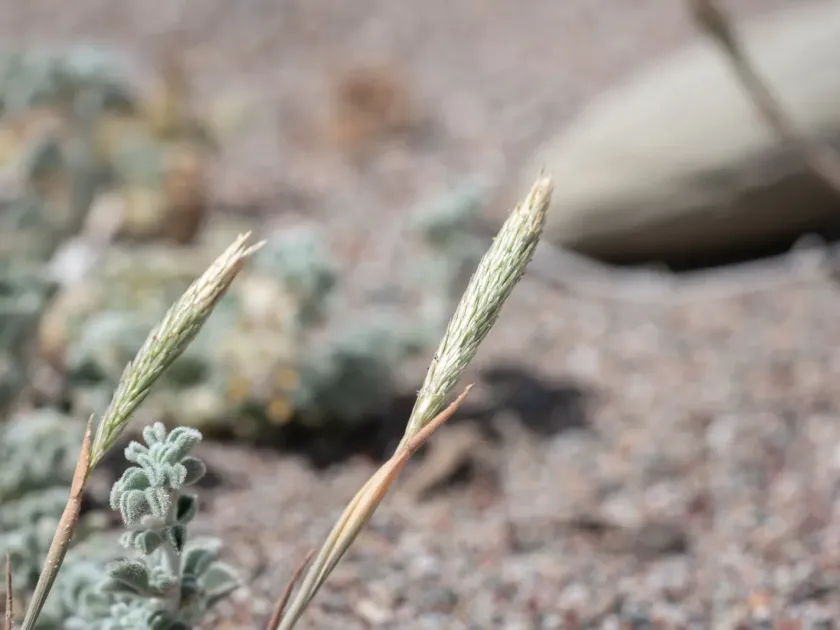
Botanically, it features narrow leaves and a slender inflorescence that gives it a characteristic shining appearance. This structural adaptation helps the plant manage its water balance throughout the short growing season.