
Trimenia papuana
Trimenia papuana
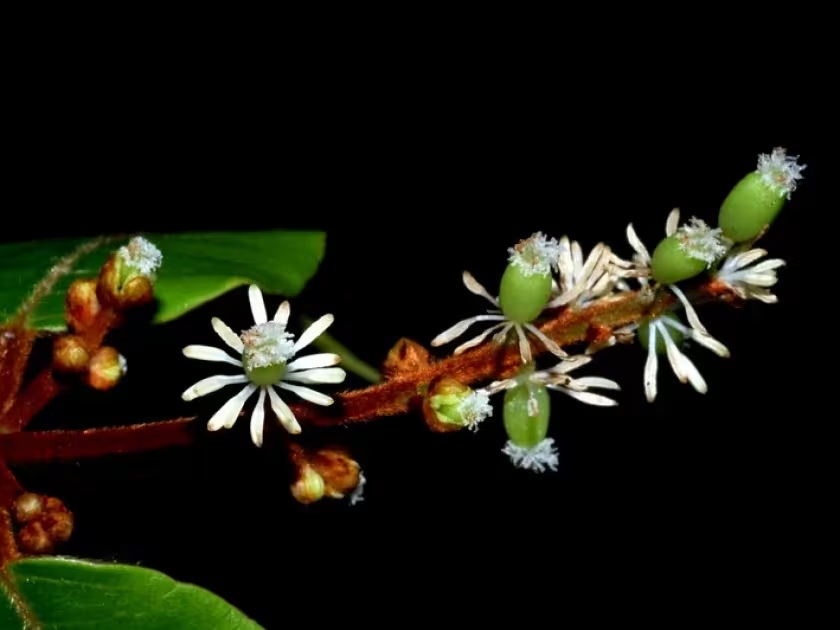
Description
Growing requirements
Trimenia papuana is a rare woody shrub species belonging to the Trimeniaceae family. This endemic plant is primarily found in the mountainous regions of New Guinea and surrounding archipelagoes, where it thrives in specific ecological niches.
The culture prefers moist tropical and subtropical montane forests. As an understory plant, it requires dappled sunlight and consistently high atmospheric humidity to maintain healthy physiological processes and growth.
It prefers well-drained, nutrient-rich forest soils with an acidic to neutral pH level. In its natural habitat, the plant is adapted to steep, high-precipitation slopes where soil moisture remains stable throughout the year.
The ideal temperature range for this species is between 18 and 26 degrees Celsius. It is highly sensitive to extreme temperature fluctuations, prolonged dry spells, and direct, intense sunlight, which can cause significant leaf damage.
Regarding its utility, Trimenia papuana is mainly recognized for its role in biodiversity studies and its function within complex agroforestry systems. Due to its precise environmental needs, it is not currently cultivated on a large-scale commercial basis.
Main diseases and pests
The primary threats to this species are linked to climate change and the large-scale deforestation of montane tropical ecosystems. The loss of stable forest cover directly impacts the survival rate of existing populations.
While specific pests for the Trimeniaceae family are still under investigation, young shoots are vulnerable to common greenhouse and garden pests, such as aphids and spider mites, during active growth phases.
Fungal pathogens represent a constant threat in high-humidity environments. Root rot can occur rapidly if the soil drainage is compromised, leading to water accumulation around the sensitive root systems.
Invasive plant species present a significant competitive challenge in wild habitats. These faster-growing plants often overtop Trimenia, depriving it of the limited sunlight required for its development in the forest understory.
Human activities, including land development and soil disturbance, lead to severe habitat fragmentation. This erosion of the local microclimate makes it increasingly difficult for the species to naturally regenerate in disturbed areas.