
Trigonia nivea
Trigonia nivea
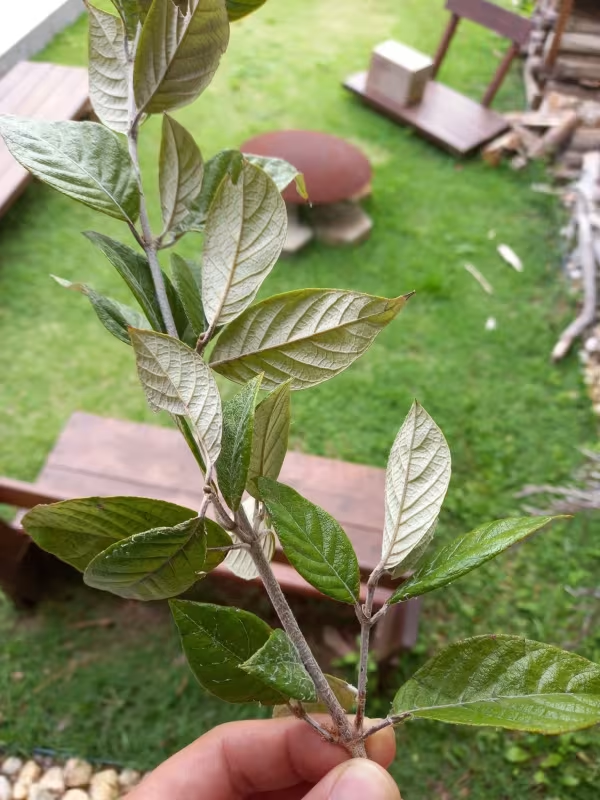
Description
Sowing dates
Trigonia nivea is a perennial woody plant species, typically propagated in agricultural settings through vegetative cuttings or specialized seed germination programs.
The optimal timing for planting usually aligns with the onset of the rainy season to ensure sufficient moisture for the root system to establish successfully.
Seeds often require pre-treatment or scarification to overcome dormancy, followed by cultivation in nursery trays before being transplanted into the main field.
Soil preparation must involve deep tilling and the incorporation of organic matter to provide a nutrient-rich foundation for the developing seedlings.
Spacing is a critical factor, as mature plants develop a significant canopy that requires adequate airflow and light penetration for optimal health.
Growing requirements
As a member of the Trigoniaceae family, this crop thrives in environments characterized by consistently high temperatures and tropical humidity levels.
The ideal soil conditions consist of well-drained loamy or sandy substrates that prevent waterlogging, which is a common cause of failure for this species.
The crop requires full sun exposure for the majority of the day to support its metabolic processes, although young plants may benefit from partial shade.
Nutrient management involves the balanced application of macro and micronutrients during the peak growing season to ensure robust growth of stems and leaves.
Water management must be precise; while the crop enjoys moisture, standing water in the root zone is detrimental and should be avoided through good drainage.
Main diseases and pests
The primary phytosanitary threats for Trigonia nivea include various fungal pathogens that flourish in high-humidity environments and target the plant's vascular system.
Common insect pests, such as scale insects and spider mites, pose a significant risk by feeding on foliage, which can stunt the overall growth of the plant.
Effective management strategies rely on regular canopy thinning to improve airflow and the timely removal of any damaged or necrotic plant parts.
Integrated pest management (IPM) practices, including the use of targeted biological agents, are recommended to control pest populations while preserving soil health.
Monitoring for signs of stress or infection is essential, as early detection allows for localized treatments that prevent widespread outbreaks across the field.