
Tricliceras longipedunculatum
Tricliceras longipedunculatum
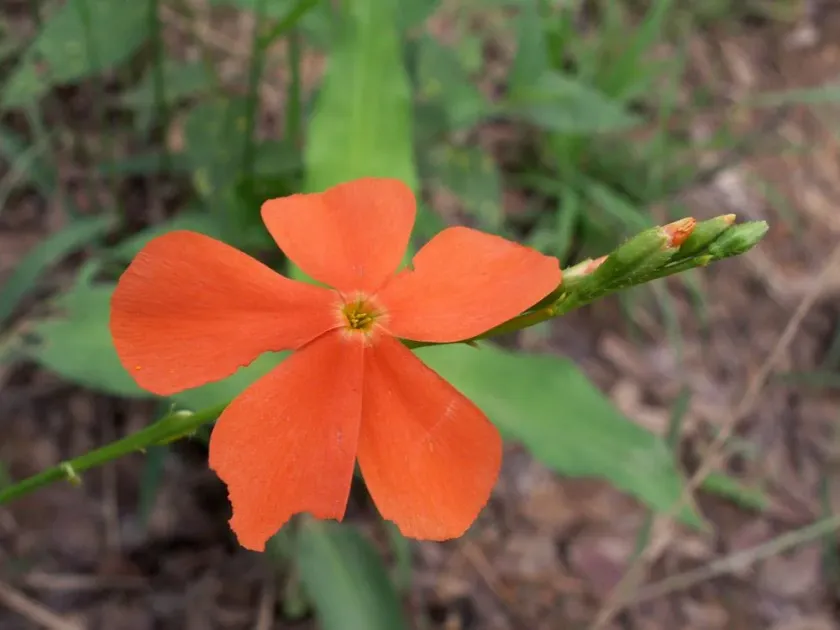
Description
Growing requirements
Tricliceras longipedunculatum belongs to the family Passifloraceae, native to the arid and semi-arid regions of southern Africa. It is a perennial herbaceous plant known for its structural adaptations that allow it to thrive in highly demanding environments with erratic rainfall patterns.
The plant exhibits a specialized root system, often featuring a thickened base that acts as a water storage organ. This morphological trait is critical for survival in its natural habitat, enabling the plant to enter dormancy during prolonged dry spells and recover rapidly when moisture becomes available.
For agricultural or horticultural cultivation, the soil must be exceptionally well-draining. A mix consisting of mineral-based components, such as coarse sand, pumice, or expanded clay, is recommended. Standard potting mixes that retain excessive moisture are generally fatal to the root structure of this species.
Environmental conditions require high levels of solar radiation. The plant is essentially heliophilic, meaning it performs best when placed in full sun. In indoor or greenhouse settings, supplemental lighting may be necessary to prevent etiolation, which weakens the long peduncles characteristic of the species.
While not a major commercial crop, Tricliceras longipedunculatum holds significant value in the study of xerophytic adaptation. Its potential use in xeriscaping or as a specialized research plant is limited by the difficulty of reproducing its native ecological niche in temperate latitudes.
Main diseases and pests
The primary threats to this species in cultivation are fungal infections caused by over-irrigation. Waterlogged soil conditions quickly destroy the root tissue, leading to irreversible wilting and death. Careful monitoring of soil moisture levels is essential to prevent these issues.
Pests such as spider mites, mealybugs, and scale insects are common in controlled environments. These pests tend to colonize the stems and foliage, extracting nutrients and weakening the plant structure. Integrated pest management, focusing on biological controls and minimal chemical interference, is advised.