
Tovaria pendula
Tovaria pendula
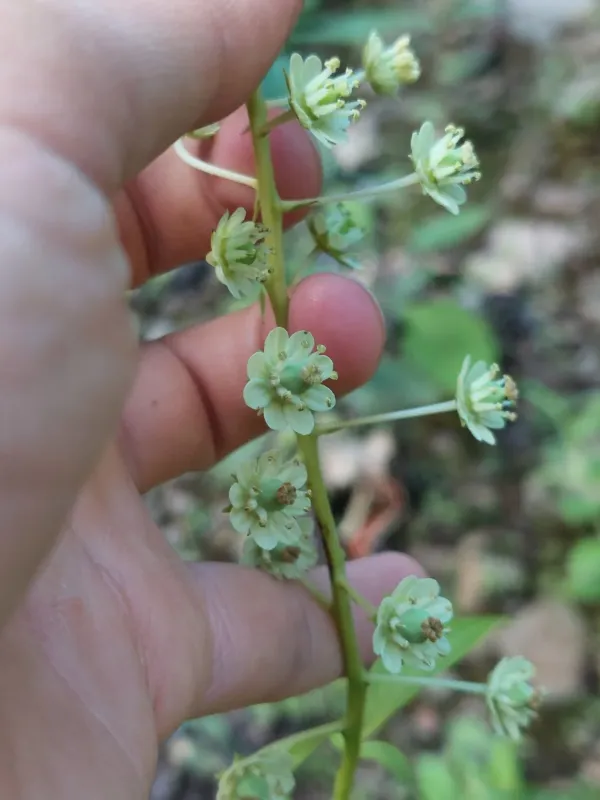
Description
Growing requirements
Tovaria pendula is a rare flowering plant species that serves as the type genus for the Tovariaceae family. This plant is native to the mountainous regions of tropical Central and South America, where it thrives in specific ecological niches.
Botanically, it is classified as a herbaceous perennial or subshrub. It is characterized by compound trifoliate leaves and distinctive pendulous racemes, which give the plant its characteristic nodding appearance during the flowering phase.
The plant requires a high-humidity tropical climate with stable, moderate temperatures to flourish. It typically prefers sheltered environments that mimic the filtered light found in forest understories and mountain edges.
Regarding soil, Tovaria pendula demands high-quality, well-draining substrates rich in organic matter. Proper soil structure is critical, as the roots are sensitive to waterlogging and compaction in non-native soil types.
Growing this species in a controlled environment requires careful monitoring of environmental parameters. The plant exhibits rapid vegetative growth when nitrogen-rich fertilizers are applied, provided that moisture levels are consistently maintained.
Main diseases and pests
Fungal infections remain the primary threat to the stability of Tovaria pendula populations. High humidity in confined growing spaces can easily trigger outbreaks of powdery mildew and various root rot pathogens.
Pest management is focused on controlling spider mites and whiteflies, which frequently attack the tender foliage. Regular scouting and preventative sanitation are essential to keep these populations at non-damaging levels.
Root-knot nematodes present a significant risk to the plant's health, particularly for younger specimens in greenhouse settings. Utilizing sterile potting media is a primary recommendation for all cultivation attempts.
Bacterial stem infections require immediate intervention, often involving the excision of damaged tissue to prevent systemic spread. Maintaining adequate spacing between individual plants is necessary to promote optimal airflow.
Because there is limited agronomic data on the chemical tolerance of this species, growers are advised to test any pesticides on a small portion of the plant before applying them widely.