
Thuarea involuta
Thuarea involuta
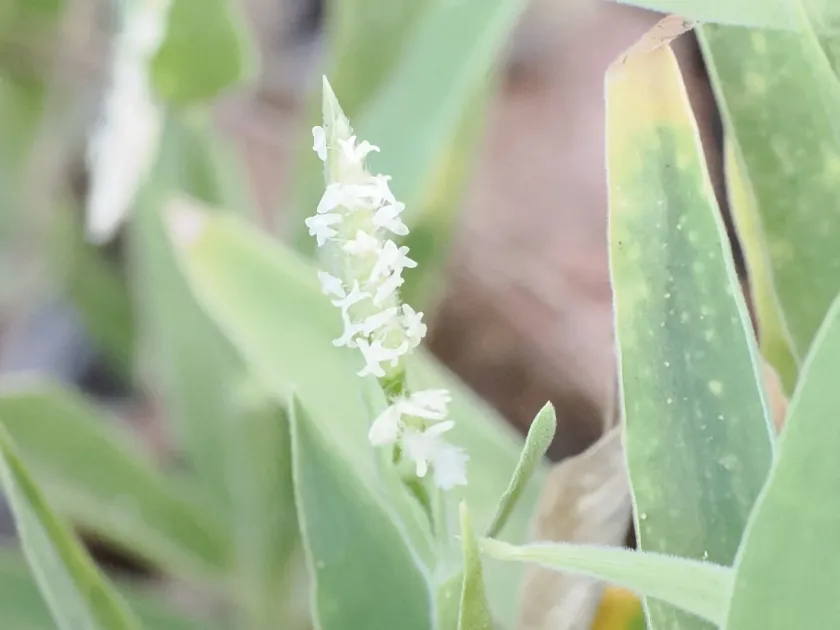
Description
Sowing dates
Thuarea involuta is a perennial herbaceous plant that reproduces naturally through seeds dispersed effectively by ocean currents along tropical shorelines.
In cultivation settings, sowing is best initiated at the onset of the rainy season to provide the essential moisture levels required for successful germination.
The plant exhibits remarkable adaptability, allowing it to colonize sandy substrates that are typically challenging for more sensitive agricultural species.
Proper site preparation is vital; this includes removing competitive weed species that might inhibit the growth of young seedlings during the establishment phase.
Seed depth should be kept minimal, as the small size of the seeds prevents emergence if they are buried too deep within the soil profile.
Growing requirements
Belonging to the Poaceae family, Thuarea involuta is specifically evolved to thrive in the harsh, saline conditions of tropical coastal zones.
The plant is highly light-demanding, requiring open exposure to direct sunlight and showing poor tolerance for shading from competing vegetation or trees.
It favors sandy, well-draining soils that facilitate rapid water infiltration, which is critical for preventing root rot in coastal environments.
Salt tolerance is a signature trait of this species, enabling it to withstand heavy sea spray and occasional inundation by tidal saltwater.
Consistent warm temperatures, typical of tropical climates, are necessary for the plant to maintain its metabolic activities and vegetative growth throughout the year.
Yield
While not traditionally cultivated as a high-input industrial crop, Thuarea involuta provides significant ecological value through the creation of dense ground cover.
The yield of green biomass is heavily dependent on moisture availability; under optimal conditions, it forms a thick mat that protects the soil surface.
This biomass serves as a vital forage resource for livestock grazing in coastal regions, offering a sustainable source of fiber and nutrients.
In agricultural terms, the value of this crop is frequently measured by its capacity to prevent wind and water erosion rather than sheer biomass tonnage.
Productivity can be enhanced with minimal management, such as protecting the area from overgrazing during the peak growing season.
Main diseases and pests
The most significant threats to Thuarea involuta populations are invasive plant species that can rapidly overtake its habitat and create excessive shade.
Although the species is quite resilient to common cereal diseases, waterlogged soils without proper drainage can lead to various fungal rot infections.
Specific insect pests that feed on coastal grasses may cause damage to the foliage, particularly during periods of environmental stress or drought.
Human impact, including overgrazing by domestic animals and physical destruction of dunes, poses a major risk to the sustainability of these grass communities.
Global climatic changes and rising sea levels present long-term threats to the natural coastal habitats where this species is traditionally established.
Harvesting
Harvesting of Thuarea involuta is generally conducted through controlled, low-intensity grazing systems that allow for natural regrowth of the grass mat.
If manual harvesting for forage is required, careful mowing techniques should be employed to ensure that the base of the plant remains intact for regeneration.
The optimal time for seed collection occurs at the end of the growth cycle when the seed heads turn brown and begin to detach naturally from the stems.
It is crucial to avoid the use of heavy machinery, as it can easily damage the fragile structure of sandy soils and disrupt the plant's shallow root system.
Implementing a rotational grazing or harvest schedule helps maintain the long-term health of the site and ensures continuous productivity of the grass cover.