
Tetraspora gelatinosa
Tetraspora gelatinosa
Description
Growing requirements
Tetraspora gelatinosa is a freshwater green alga belonging to the family Tetrasporaceae. While it is not a cultivated agricultural crop, it serves as an important indicator species for water quality and ecosystem health in freshwater habitats.
The species is commonly found in still or slow-moving water bodies such as ponds, ditches, and the edges of lakes. It typically attaches to submerged rocks, twigs, or other aquatic vegetation, forming jelly-like colonies that are visible to the naked eye.
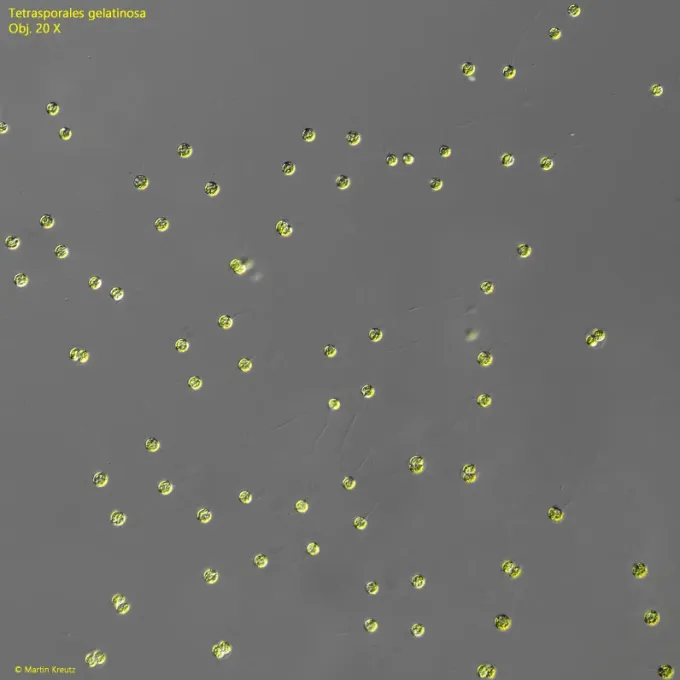
Morphologically, the species is defined by its soft, gelatinous macroscopic colonies that contain groups of four cells. These cells possess pseudocilia, which are long, non-motile cytoplasmic threads that extend through the mucilage and assist in physiological processes.
Environmental requirements for growth include clear, well-oxygenated water with moderate light penetration. The algae thrive in temperate conditions, typically exhibiting peak growth during the spring and early summer months when water temperatures range between 15°C and 22°C.
Soil or specialized fertilization is not required as the organism is strictly aquatic. Its nutrient uptake is facilitated directly from the water column, relying primarily on available nitrates, phosphates, and carbon dioxide levels within its immediate environment.
Main diseases and pests
The primary threat to Tetraspora gelatinosa is chemical pollution, particularly the runoff of herbicides and fertilizers from nearby agricultural lands. High levels of chemical contaminants can disrupt the delicate mucilage structure and inhibit cellular respiration.
Eutrophication is another significant threat, as it triggers the growth of dominant phytoplankton and toxic cyanobacteria. These competitors cloud the water, reducing the light availability essential for the photosynthesis of the Tetraspora colonies.
Fungal infections, particularly from chytrid fungi, are the most common biological threat. These parasites penetrate the cell walls within the jelly matrix, leading to the rapid disintegration of the entire colony structure.
Hydro-meteorological changes, such as sudden drought or fluctuating water levels, pose severe risks to the stability of the populations. Since the colonies are often fixed to substrates, significant water level drops lead to desiccation and mortality.
Physical disturbance of water bodies, such as dredging or mechanical clearing of vegetation, directly destroys the habitat of the algae. Such activities remove the necessary substrate and disrupt the localized environment needed for the survival of the colonies.