
Tetraselmis cordiformis
Tetraselmis cordiformis
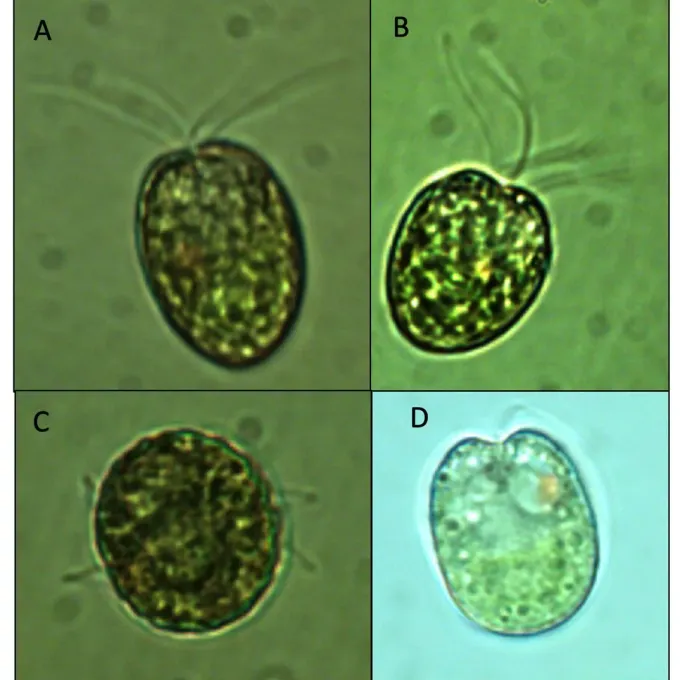
Description
Sowing dates
Tetraselmis cordiformis is a single-celled marine green alga belonging to the Chlorodendraceae family. The inoculation process involves introducing a pure strain of the algae into a nutrient-rich, sterilized medium.
Cultivation starts in a controlled laboratory environment and scales up to industrial-grade photobioreactors or open ponds. The process is continuous, ensuring a steady supply of biomass.
Careful selection of the starter culture is essential to ensure genetic stability and high growth rates. Clean conditions are maintained throughout to prevent the introduction of unwanted microorganisms.
Growth phases are carefully monitored from the lag phase through to the exponential growth phase. Automated systems are often used to maintain optimal cell density for maximum yield.
In industrial settings, a portion of the culture is harvested regularly, and the system is replenished with fresh nutrients, allowing for indefinite production cycles.
Growing requirements
This species requires marine water with a salinity ranging from 20 to 35 parts per thousand. Stability in salinity is crucial for the osmotic balance of the cells.
The ideal temperature for optimal growth is between 20 and 25 degrees Celsius. Extreme temperatures can inhibit photosynthetic activity and reduce the overall cell quality.
Adequate light intensity is necessary to fuel the growth, usually ranging from 100 to 300 micromoles of photons per square meter per second. Artificial lighting is often used to ensure consistency.
A consistent supply of nutrients, primarily nitrogen and phosphorus, is required to achieve high concentrations of lipids and proteins within the algal cells.
Constant agitation or aeration is required to distribute nutrients evenly, provide carbon dioxide, and prevent the cells from settling at the bottom of the vessel.
Yield
The yield of Tetraselmis cordiformis is measured by cell density per milliliter and dry biomass weight. Higher yields are achieved through precision control of the light-to-nutrient ratio.
Harvesting is typically performed via centrifugation or flocculation methods once the culture reaches its peak growth density, ensuring maximum nutritional content.
The biomass is a critical component in aquaculture, providing essential fatty acids and amino acids required for the development of larval fish, shrimp, and shellfish.
Consistent monitoring of growth kinetics allows producers to time the harvest accurately, ensuring the biomass meets high quality and safety standards.
Modern harvesting techniques aim to minimize mechanical stress on the cells, preserving their nutritional profile and structural integrity for end-use in feed.
Main diseases and pests
Biological contamination remains the primary threat, as invasive microorganisms can rapidly outcompete the Tetraselmis culture for available resources.
Bacterial or viral outbreaks within the growth medium can lead to total population collapse if not addressed early with strict sterilization protocols.
Fluctuations in pH levels, often caused by carbon dioxide depletion, can lead to metabolic stress and severely impact the growth rate and viability of the cells.
Nutrient depletion or the buildup of metabolic waste products can hinder growth, requiring frequent water exchange or real-time monitoring of the chemical composition.
- Invasive algae species
- Protozoan predators
- Chemical imbalance in growth medium