
Red-barked dogwood
Cornus alba L.
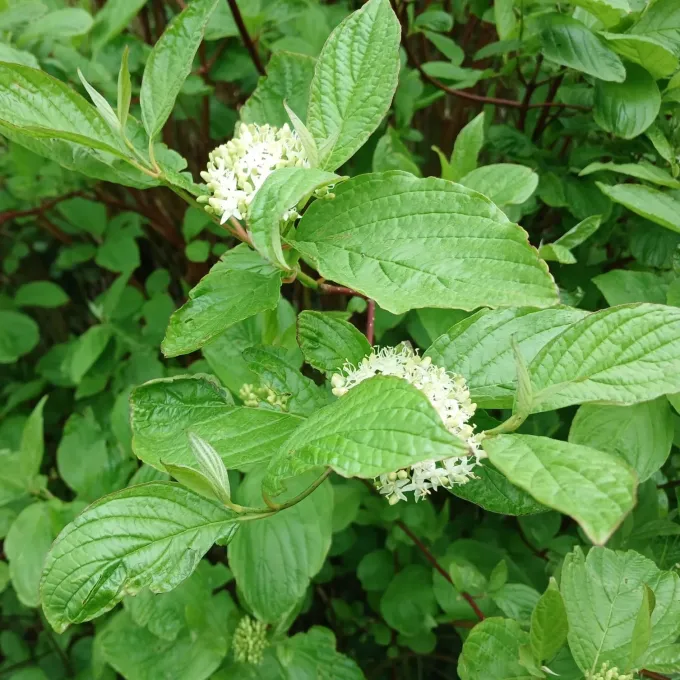
Description
Growing requirements
The red-barked dogwood (Cornus alba L.) belongs to the Cornaceae family. It is a deciduous shrub species native to Siberia, North China, and Korea. Renowned for its cold hardiness and vibrant red stems, it is a staple plant in both ornamental gardening and land restoration projects.
The species is highly adaptable to various soil types, thriving in both heavy clays and moist, sandy soils. It demonstrates exceptional tolerance to waterlogged conditions, making it an ideal choice for planting near ponds, streams, or in areas with poor natural drainage.
In terms of climate requirements, this plant is remarkably resilient. It is fully hardy in temperate and subarctic regions. While it performs best in full sun, it is capable of growing in partial shade, although the intensity of the stem color may vary depending on light availability.
Agronomic practices for this species focus primarily on pruning. To maintain the striking red color of the bark, which fades on older branches, gardeners perform annual hard pruning to encourage vigorous new growth. Regular maintenance ensures a dense and healthy habit.
The commercial use of Cornus alba spans from large-scale landscaping to erosion control. Its aggressive and extensive root system makes it an excellent candidate for stabilizing embankments, riverbanks, and degraded landscapes prone to soil erosion.
Main diseases and pests
Cornus alba is generally resistant to most pests and diseases. However, in poorly ventilated or excessively humid environments, the plant can occasionally suffer from powdery mildew, which manifests as a white fungal coating on the leaves.
Common insect pests include aphids and scale insects. These pests feed on the sap of the plant and are most likely to appear on new, succulent growth. While they rarely kill established shrubs, they can reduce overall plant vigor if left untreated.
Effective management includes maintaining proper spacing between plants to ensure good airflow. Removing fallen foliage in autumn helps reduce the risk of overwintering fungal spores, promoting a healthier growing environment for the next season.
When chemical intervention is required, systemic insecticides are effective against sap-sucking insects. It is important to apply these treatments according to label instructions to minimize environmental impact and protect beneficial predatory insects.
The longevity of this plant is a significant agricultural advantage. With minimal inputs and basic care, dogwood shrubs can thrive for several decades, making them a sustainable and reliable component of any planting scheme or hedge design.