
Targionia hypophylla
Targionia hypophylla
Description
Growing requirements
Targionia hypophylla is a well-known species of liverwort belonging to the family Targioniaceae. It is a non-vascular plant, which means it lacks the specialized tissues found in crops, yet it serves as a critical model organism for studying bryophyte resilience and adaptation.
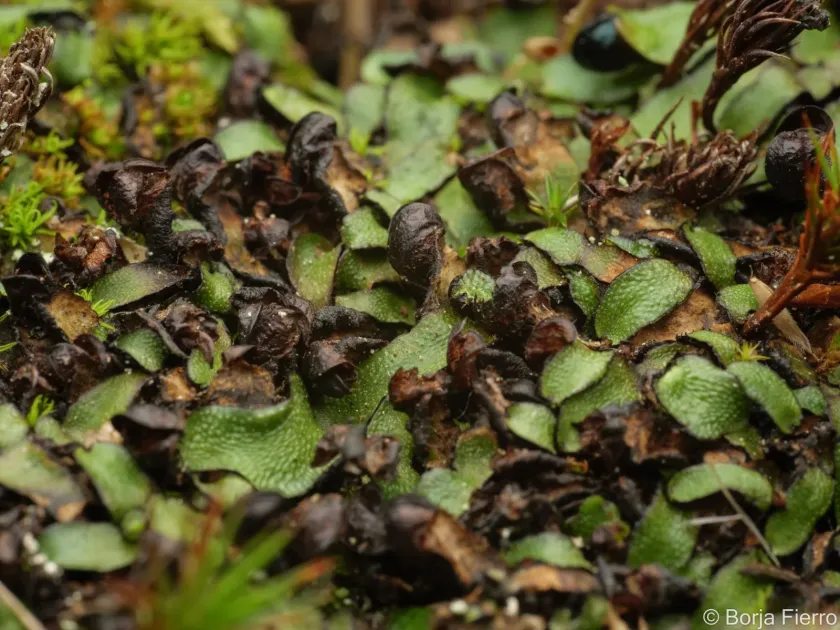
The morphology of this plant consists of a thalloid structure, appearing as flat, dark green lobes spreading across the substrate. It lacks true leaves and stems, relying instead on unicellular rhizoids that provide anchorage and minimal absorption capabilities from the soil surface.
Geographically, the species has a nearly cosmopolitan distribution, though it is particularly abundant in Mediterranean-type climates. It thrives in crevices, on damp soil, and among rocks, demonstrating a remarkable ability to survive dry seasons through physiological dormancy.
Reproductive biology of T. hypophylla involves the production of sporophytes protected by specialized involucres. These structures are essential for the dispersal of spores, which are carried by wind to colonize new, suitable environments where humidity is sufficient for germination.
From an ecological perspective, this liverwort acts as a pioneer species in colonizing barren ground. By binding fine soil particles and accumulating organic matter, it paves the way for successional development of vascular plant communities, despite having no direct role in agricultural production or industrial crop systems.