
Taraxacum obovatum
Taraxacum obovatum
Description
Growing requirements
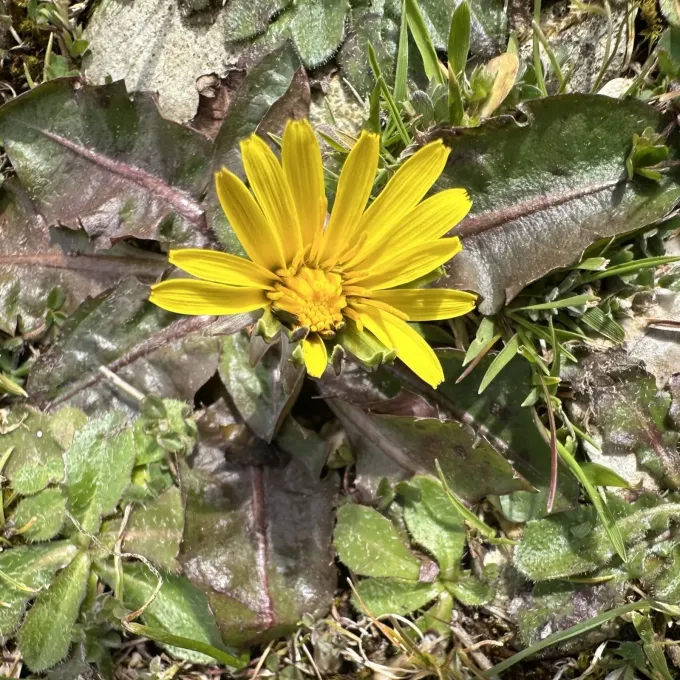
Taraxacum obovatum, also known as the obovate dandelion, is a perennial herbaceous plant belonging to the Asteraceae family. It is native to various regions in Europe and the Mediterranean, typically inhabiting open, rocky, and calcareous environments.
The plant is characterized by its distinct obovate or spatulate leaves, which are arranged in a basal rosette. This morphology allows the plant to efficiently capture solar energy while maintaining a compact structure suitable for growth in rocky soils.
Botanically, it possesses a deep taproot that provides stability and serves as a reservoir for carbohydrates. This adaptation allows the species to survive prolonged periods of drought and regrow vigorously in the early spring season.
Regarding its environmental requirements, the plant thrives in well-drained, sunny locations with moderate moisture. It is well-suited for soil conditions that are neutral to slightly alkaline, reflecting its preference for lime-rich substrates.
In terms of usage, the plant has potential applications in herbal medicine and as a source of nectar for pollinators. Its ability to colonize difficult terrains also makes it a subject of interest for erosion control in natural landscape management.
Main diseases and pests
The species is susceptible to various fungal pathogens, with powdery mildew being the most common issue in dense populations where airflow is restricted and humidity levels remain high.
Insect pests, particularly aphids, frequently infest the underside of the leaves, drawing nutrients from the plant and potentially vectoring viral diseases that reduce overall vigor.
Soil-dwelling larvae, such as those of the click beetle (wireworms), pose a significant threat to the root system, potentially causing stunted growth or total plant failure if left unchecked.
Competition from aggressive grass species is a major challenge during the early establishment phase of the plant, as weeds can quickly overshadow the slow-growing rosette.
Effective management requires regular monitoring for early signs of infestation and ensuring proper site selection to avoid conditions that promote pathogen development.