
Tacazzea apiculata
Tacazzea apiculata
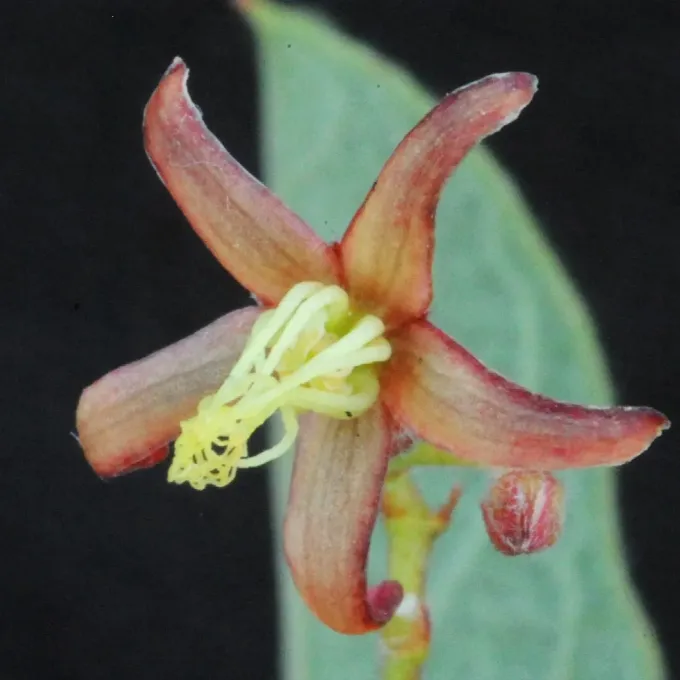
Description
Sowing dates
Tacazzea apiculata is a member of the Apocynaceae family, known for its climbing habit. In an agricultural context, it is propagated primarily through seed sowing in a controlled environment to ensure high germination rates.
Seeds should be sown in a well-draining potting medium, covered lightly with soil, and kept at a steady temperature of approximately 25 degrees Celsius. Moisture must be maintained consistently during the early germination phase.
Transplanting seedlings to the field occurs once they have developed a robust root system and multiple sets of true leaves, usually after the threat of frost has completely passed in the region.
For optimal growth, seedlings should be spaced out to allow for sufficient air circulation, preventing the development of fungal pathogens that are common in dense planting schemes.
Using high-quality, viable seeds is essential for a productive harvest, and farmers are advised to perform germination tests before large-scale planting to determine actual density requirements.
Growing requirements
Tacazzea apiculata thrives in tropical and subtropical climates, requiring full to partial sunlight to achieve vigorous vegetative growth throughout the season.
The plant performs best in sandy or loamy soils that possess excellent drainage qualities. Excessive soil moisture is detrimental, as it can cause rapid decay of the root structure.
While mature plants demonstrate resilience to periodic water shortages, irrigation is highly recommended during the peak of the dry season to ensure optimal biomass production.
Structural support is a non-negotiable requirement for this species. As a climbing vine, it must be provided with trellises or similar vertical structures to prevent the foliage from matting on the ground.
Temperature control is vital; the plant does not tolerate frost, and sustained exposure to temperatures below 10 degrees Celsius can lead to significant physiological stress and growth arrest.
Yield
The economic value of Tacazzea apiculata lies in its roots and leaves, which are harvested for specific phytochemical extracts used in traditional and modern medicinal applications.
Yields are maximized by implementing a scheduled pruning program, which encourages the development of lateral shoots and increases the total weight of the harvestable biomass.
Roots should be harvested only after the plant has reached maturity, typically after two growing seasons, to ensure that the chemical profile of the plant is fully developed and potent.
Post-harvest handling involves cleaning, sorting, and drying the material in well-ventilated areas, away from direct sunlight, to preserve the integrity of the active ingredients.
Consistency in harvest timing is critical; late harvesting may lead to the lignification of the roots, which negatively impacts the extraction efficiency during downstream processing.
Main diseases and pests
The most significant threat to plant health is root rot caused by poor soil drainage or excessive rainfall, especially in low-lying fields where water naturally tends to accumulate.
Insect pests, specifically aphids and spider mites, pose a constant threat to the leaves and young stems. These pests can cause chlorosis and significant deformation of the climbing vines.
Fungal leaf spots represent another common problem, usually exacerbated by high humidity and stagnant air. Management strategies include regular inspection and removal of infected foliage.
In some regions, subterranean pests such as nematodes can target the root system, necessitating the use of crop rotation or organic soil amendments to maintain soil health.
Integrated pest management, combining physical barriers and biological controls, is the preferred approach to keeping the plantation healthy and productive without relying on heavy chemical use.