
Tabernaemontana divaricata
Tabernaemontana divaricata (L.) R. Br. ex Roem. & Schult.
Description
Growing requirements
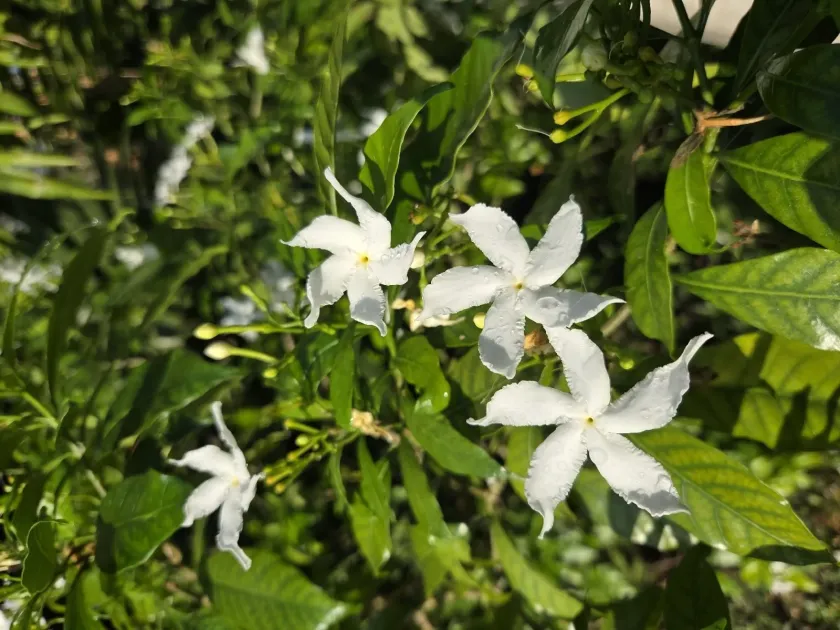
Tabernaemontana divaricata, commonly known as Crape Jasmine, is an evergreen shrub belonging to the Apocynaceae family. Native to the tropical regions of Southeast Asia, it is widely cultivated for its waxy, fragrant white flowers and glossy green foliage.
The crop thrives in tropical and subtropical climates, requiring consistent temperatures ranging from 18°C to 28°C. It is frost-sensitive and should be kept in protected environments if temperatures drop below 15°C.
Soil conditions are essential for healthy growth; the plant requires a well-draining, acidic to neutral soil mixture. A combination of potting soil, peat moss, and perlite provides the necessary aeration for the roots to breathe and develop properly.
Light intensity should be high but indirect. Direct, intense sunlight during the midday hours can scorch the leaves, whereas insufficient light leads to sparse foliage and a significant reduction in flower production.
Watering requirements include keeping the soil consistently moist but never waterlogged. During the peak growing season, regular irrigation is vital, while winter months call for a reduction in water to allow the plant a period of rest.
Main diseases and pests
Spider mites are the most common pest, especially in environments with low humidity. These microscopic pests target the underside of leaves, causing yellowing and webbing, which can be mitigated using insecticidal soaps.
Scale insects frequently infest the stems and leaves, creating sticky honeydew deposits. Regular cleaning with a damp cloth or application of neem oil serves as an effective control measure for small infestations.
Root rot is a major physiological threat caused by overwatering or poor drainage. It results in root tissue decay, which often leads to the death of the plant if not addressed by immediate soil replacement.
Leaf spot fungi can develop during periods of high humidity and stagnant air. Proper spacing and good ventilation around the canopy significantly reduce the risk of such fungal infections.
Aphids can occasionally attack the new, tender buds. Monitoring the plant frequently and using biological control agents or soft insecticides helps maintain the aesthetic quality of the blooms.