
Syrenia cana
Syrenia cana
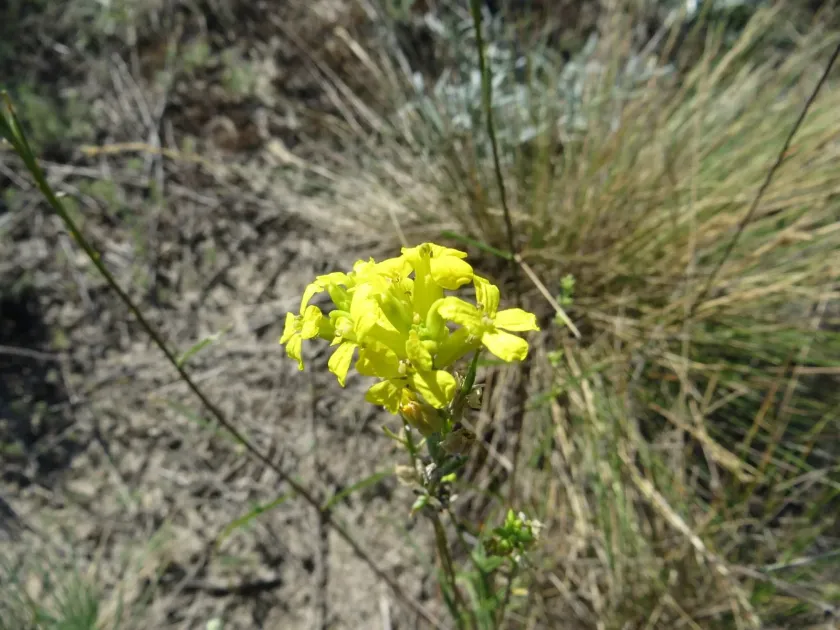
Description
Sowing dates
Syrenia cana is best adapted to sowing in early spring when the soil temperature reaches stable conditions for germination. Early planting ensures that the crop establishes its root system before the arrival of potential summer droughts.
Given the small size of the seeds, they should be sown at a shallow depth of 2 to 3 centimeters. Proper soil-to-seed contact is essential for uniform emergence, which is achieved through light rolling after the sowing process.
Row cropping is the recommended practice, with spacing of 15–20 centimeters between rows. This spacing balances plant density and allows for efficient weed management using mechanical cultivation tools.
In regions with mild winters, autumn sowing can be a viable strategy. This allows the plants to undergo natural vernalization, resulting in vigorous spring growth and earlier maturation compared to spring-sown crops.
Seedbed preparation should focus on creating a fine tilth. Removing large soil clods and crop residues from previous seasons helps maintain consistent sowing depth and increases the success rate of the stand establishment.
Growing requirements
Belonging to the Brassicaceae family, Syrenia cana exhibits significant resilience to environmental stress. It thrives in well-drained sandy or loamy soils, showing adaptability to various soil structures.
The crop is highly drought-tolerant and possesses good frost resistance, making it a reliable choice for arid and semi-arid agricultural landscapes. It avoids waterlogged conditions, which can inhibit its development.
Sunlight is critical for the metabolic processes of this plant. Providing open, sunny fields is necessary for optimal oil accumulation within the seeds and the development of robust vegetative biomass.
Nutrient requirements are moderate, with a preference for neutral pH soils. Strategic application of nitrogen and phosphorus during the early vegetative stage can significantly improve the final yield outcomes.
The crop is relatively hardy, but it performs best when temperature fluctuations are within the moderate range. It successfully colonizes disturbed soils, which speaks to its biological hardiness as a field crop.
Yield
The yield potential of Syrenia cana depends on effective water management during the flowering phase. Adequate moisture during this window is a primary driver for seed set and overall pod development.
Beyond seed production, the plant serves as a valuable source of green biomass. Harvesting the foliage before the stem becomes too lignified allows for its utilization as a supplementary feed source in livestock systems.
Optimizing plant density is key to maximizing harvest efficiency. Overcrowding can lead to increased competition for nutrients and light, which reduces the average number of pods per plant.
The seeds contain high-quality oils, making the species interesting for industrial and potential fuel applications. Stability in oil composition remains a major advantage for processing and storage.
Consistent agronomic practices, including the reduction of competition from weeds, ensure that the potential of the variety is fully met at the end of the growth cycle.
Main diseases and pests
Pests commonly associated with the Brassicaceae family, particularly flea beetles, pose the greatest threat during the seedling stage. Early detection and immediate intervention are necessary to protect young stands.
Fungal pathogens such as downy mildew and alternaria blight can affect the crop under high humidity conditions. Implementing long-term crop rotation cycles significantly reduces the pressure from soil-borne pathogens.
Weed pressure in the early weeks is a major competitor for resources. Mechanical cultivation is highly effective as long as the plants are not yet at the late flowering stage, which avoids mechanical damage.
Monitoring local populations of aphids and other sucking insects during the mid-growth phase is advisable. If threshold levels are reached, appropriate biological or chemical controls may be employed.
Maintaining spatial distance from other cruciferous crops is a preventative measure against the spread of pests and diseases that are specific to the family, enhancing the overall farm health.
Harvesting
Determining the harvest date requires close monitoring of the pods as they change color. Harvesting at the correct maturity level prevents the natural dehiscence and seed loss that occur when the pods are over-ripe.
Swathing, or the two-stage harvest method, is often preferred. This technique involves cutting the plants when the pods are at a late-dough stage, allowing for uniform moisture loss and reduced shattering losses.
Post-harvest processing involves drying the harvested seed to a moisture content suitable for long-term storage. Failure to dry the crop properly leads to mold growth and spoilage within a very short period.
Mechanical harvesting equipment must be carefully calibrated for the small size of the seeds. Ensuring that the threshing drum speed is set correctly minimizes damage to the seed coat during the operation.
Cleaned and dried seeds should be stored in cool, dry conditions. Proper ventilation in storage facilities prevents the accumulation of heat, ensuring the viability and quality of the seeds until they are marketed or processed.