
Asparagopsis taxiformis
Asparagopsis taxiformis (Delile) Trevisan
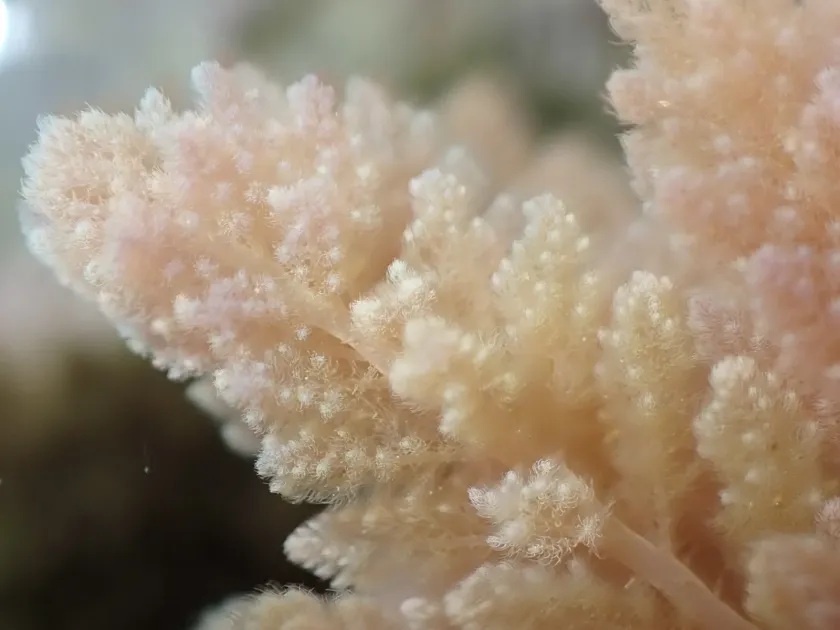
Description
Growing requirements
Asparagopsis taxiformis is a red macroalga belonging to the Bonnemaisoniaceae family, primarily native to tropical and subtropical marine environments. It thrives in water temperatures ranging from 20 to 28 degrees Celsius and requires high light intensity for optimal growth and photosynthetic efficiency.
The culture demands specific environmental conditions, including constant water circulation to ensure a steady supply of essential nutrients like nitrogen and phosphorus. Understanding its complex life cycle, which involves the alternation of gametophyte and tetrasporophyte stages, is crucial for systematic farming.
Industrial cultivation is performed both in open-ocean farms and closed-loop recirculating aquaculture systems (RAS). Closed systems provide the benefit of strict control over water chemistry, including pH, salinity, and nutrient concentrations, leading to more predictable harvest results.
Biologically, this species is unique for its ability to produce secondary metabolites, specifically halogenated compounds. These natural chemicals serve as an defense mechanism against grazers and are the primary source of its effectiveness as a methane-mitigating feed additive.
Advanced cultivation requires specific substrates for vegetative attachment and automated monitoring systems to manage water quality. Precision farming techniques allow operators to maximize biomass yields and ensure the stability of active organic compound production throughout the growth cycle.
Yield
The yield of Asparagopsis taxiformis is highly dependent on light availability, water current velocity, and nutrient management. Although commercial scaling is still in the developmental phase, high-density cultivation setups are showing promising results for large-scale production.
The primary economic value of the harvest is its ability to reduce methane emissions in ruminants by inhibiting specific enzymes in their gut microbiome. This functionality has turned this seaweed into a highly sought-after commodity in the global livestock sustainability sector.
Researchers are focusing on the selective breeding of fast-growing strains that can adapt effectively to artificial environment conditions. Improving growth rates in indoor tanks is essential for mitigating the variability inherent in open-ocean cultivation.
The harvesting process involves careful mechanical cutting to ensure the seaweed can regenerate from the remaining vegetative tissue. Post-harvest, the biomass is typically dried or freeze-dried immediately to stabilize its potent chemical components.
Current economic assessments suggest a high profitability potential for seaweed farmers, driven by the increasing demand for sustainable agricultural solutions. Future yield improvements are expected through the integration of solar-powered automation and robotic harvesting equipment.
Main diseases and pests
The most significant threat to seaweed farms is the colonization by epiphytic algae. These opportunistic organisms compete for nutrients and light, which can severely stunt the growth of Asparagopsis taxiformis and reduce the quality of the raw material.
Thermal stress caused by marine heatwaves poses a major challenge, leading to bleaching and necrosis of the algal thalli. Effective mitigation involves moving farm structures to deeper water layers or implementing climate-controlled circulation in land-based systems.
Poor water quality and imbalances in nutrient ratios can trigger fungal infections and bacterial blooms within the cultivation units. Regular phytosanitary monitoring and water treatment protocols are essential components of a robust biosecurity strategy.
Physical damage from strong ocean currents or storms can disrupt farm infrastructure and cause biomass loss. Investing in resilient, modular offshore farming rigs is a standard practice to reduce these physical environmental risks.
Invasive pests and pathogens remain a constant concern in aquaculture. Implementing strict biosecurity measures, such as quarantined entry of new algal stock and regular health checks, helps protect the long-term viability of the production facility.