
Streptostachys asperifolia
Streptostachys asperifolia
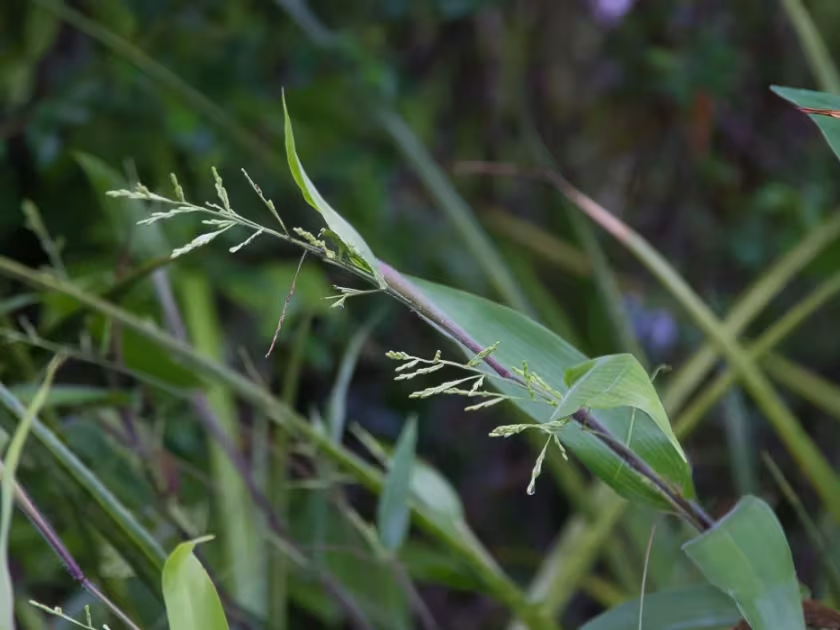
Description
Growing requirements
Streptostachys asperifolia is a perennial grass belonging to the Poaceae family. Native to the tropical regions of South America, this plant is typically found in humid forest environments where it thrives in shaded or semi-shaded habitats.
The plant is botanically identified by its distinctively scabrous or rough leaf surfaces, which give rise to its specific epithet. It exhibits a vigorous growth habit, often spreading through its root system, and maintains a structure adapted to humid tropical ecology.
Climate requirements for this species are strict, as it necessitates consistently high temperatures and high annual rainfall. It is not cold-hardy and requires an environment that mimics its natural tropical range to achieve optimal vegetative growth and biomass production.
Soil management for this culture involves maintaining high moisture levels in well-drained, nutrient-rich soils. It performs best in soils with high organic matter content, and agricultural success depends on consistent soil moisture availability throughout the growing season.
The primary agricultural utility of Streptostachys asperifolia lies in its potential as a forage crop. Due to its biomass production capabilities, it is studied for its inclusion in managed pasture systems within tropical zones to support livestock grazing requirements.