
Streptolirion volubile
Streptolirion volubile
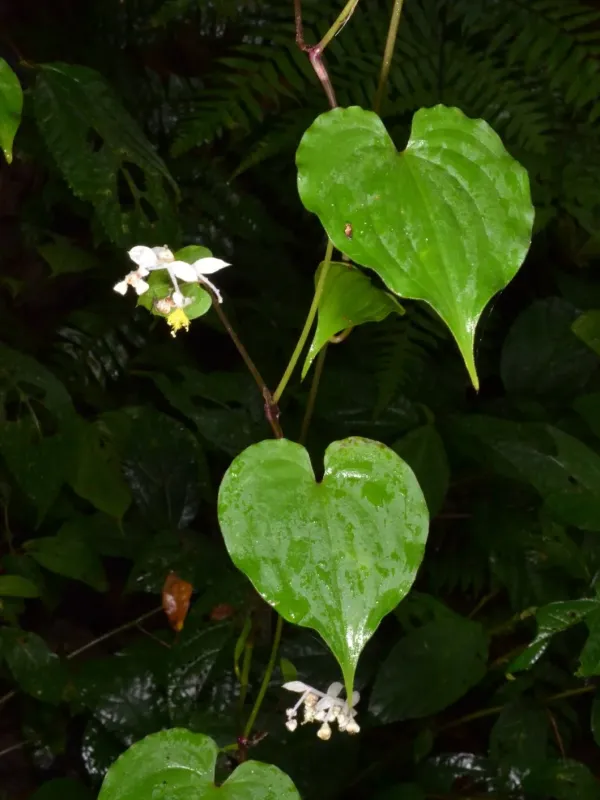
Description
Growing requirements
Streptolirion volubile is a distinctive climbing herbaceous plant belonging to the Commelinaceae family. It is widely recognized for its natural ability to climb by utilizing its twisted leaf stalks to grasp surrounding vegetation and structures.
Native to the temperate and subtropical forests of East Asia, including Japan, China, and the Russian Far East, this plant thrives in woodland habitats. It is primarily adapted to shade, making it an excellent candidate for low-light garden areas where other plants struggle.
For successful cultivation, the plant requires moist, humus-rich, and well-draining soil. It is highly sensitive to drought; therefore, maintaining consistent soil moisture is essential for its survival and lush development of the foliage.
The ideal temperature range for this species is between 15 and 22 degrees Celsius. Being a forest dweller, it requires protection from harsh, direct sunlight, which can quickly dehydrate its leaves and lead to irreversible tissue damage.
Agrotechnical maintenance involves installing vertical supports such as trellises or netting. Since the plant naturally grows in dense forest understories, providing a climbing frame allows it to exhibit its full ornamental potential as a vertical green screen.
Main diseases and pests
Spider mites are the most common pests, particularly when the ambient humidity is insufficient. Frequent misting and maintaining proper air circulation are key preventive measures to avoid large infestations in indoor or greenhouse environments.
Root rot often occurs if the soil remains waterlogged for extended periods. To prevent this, ensure that the planting medium is porous and that the irrigation schedule is adjusted based on the light intensity and room temperature.
Slugs and snails are major threats to the young shoots of Streptolirion volubile in outdoor settings. The moisture-rich environment favored by the plant is also attractive to these pests, requiring manual removal or barrier controls.
Fungal infections, such as leaf spot, can develop in stagnant, humid air. Pruning the vine selectively helps improve airflow through the foliage, reducing the likelihood of humidity-trapping that leads to fungal growth.
Nutrient imbalances, particularly chlorosis, may occur in alkaline or nutrient-poor soils. Regular applications of balanced fertilizers are recommended during the growing season to ensure vigorous health and vibrant green coloration of the leaves.