
Stichococcus bacillaris
Stichococcus bacillaris
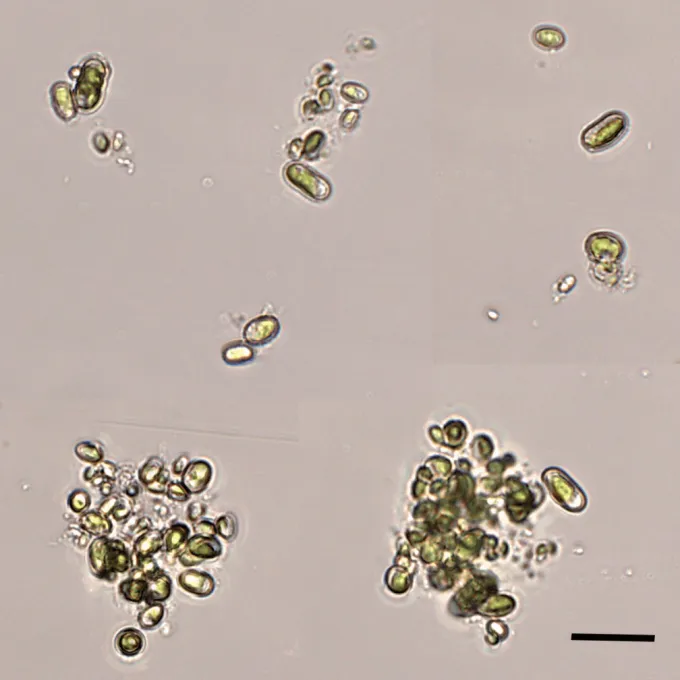
Description
Growing requirements
Stichococcus bacillaris is a unicellular green alga belonging to the Trebouxiaceae family. It is recognized as one of the most common and widely distributed soil-dwelling algae found across various terrestrial ecosystems.
The species exhibits remarkable physiological plasticity. It successfully inhabits diverse climatic zones, ranging from polar regions to temperate and tropical soils, adapting easily to fluctuations in light and moisture.
In its natural habitat, the alga prefers moist soil conditions. It is a pioneer species often found in the formation of biological soil crusts, which are essential for stabilizing the soil surface and preventing erosion.
Cultivation of Stichococcus bacillaris generally requires mineral-rich liquid media, such as BG-11 or Bold's Basal Medium. Maintaining an optimal pH level, typically ranging between 6.5 and 7.5, is crucial for promoting exponential cell growth.
The culture requires sufficient irradiance for photosynthesis. In industrial applications, the control of light spectra—particularly blue and red wavelengths—is used to enhance the production of biomass and valuable biochemical compounds.
Yield
The biomass yield of Stichococcus bacillaris in controlled photobioreactor systems is high. Under optimal conditions, the culture can produce significant quantities of cellular proteins and lipids per unit volume of culture medium.
In agricultural practice, the application of this alga as a bio-inoculant promotes soil health. It contributes to nutrient cycling and enhances the bioavailability of phosphorus and nitrogen for higher plants.
- Increased seedling vigor
- Improved soil moisture retention
- Enhanced root system development
- Higher resilience to environmental stressors
The production of extracellular polysaccharides by the alga acts as a natural soil conditioner. These compounds bind soil particles together, improving the aggregate stability of the topsoil layer.
Scaling up the harvest of this alga involves mechanical separation techniques. The collected biomass serves as a versatile resource for both organic fertilization and the production of biostimulants.
Main diseases and pests
The primary threat to Stichococcus bacillaris populations in agricultural environments is the heavy use of synthetic herbicides and fungicides. These chemicals can disrupt cellular metabolism and inhibit chlorophyll synthesis.
Soil salinization is another major factor that negatively affects growth. High levels of salinity induce osmotic stress, limiting the alga's capacity to thrive in degraded or over-fertilized soils.
Biological threats include interactions with parasitic fungi and specialized soil bacteria. These pathogens can cause colony decline, especially in environments where the alga is already weakened by abiotic stressors.
Intensive mechanical soil cultivation disrupts the surface layer where the species is most abundant. Frequent plowing reduces the density of algae, impairing their role in maintaining soil ecological balance.
Lack of moisture, when prolonged, forces the cells into a resting state. While this allows for survival during harsh periods, it interrupts the active benefits that the algae provide to the soil ecosystem.