
Stemmadenia donnell-smithii
Stemmadenia donnel-smithii
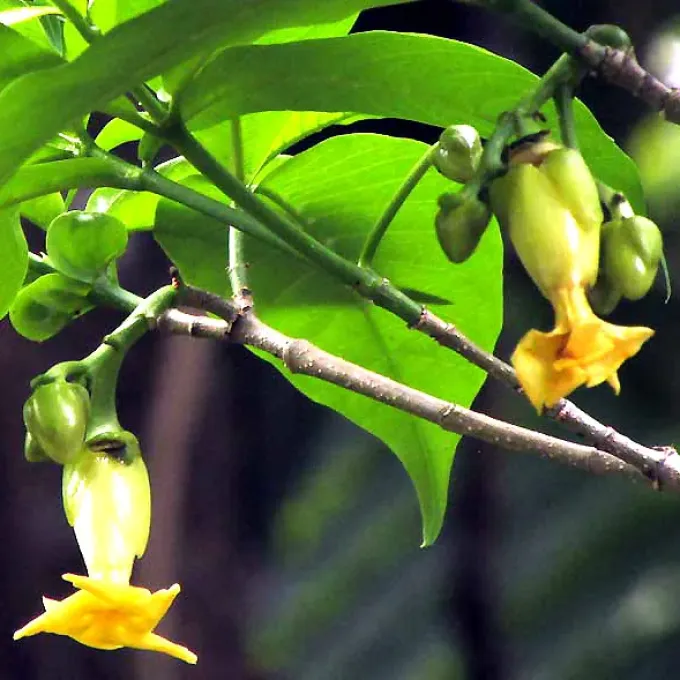
Description
Growing requirements
Stemmadenia donnell-smithii is a notable member of the Apocynaceae family. This tropical tree species is native to regions spanning from Mexico to Central America, where it thrives in diverse forest ecosystems.
The plant requires a tropical climate characterized by consistently high temperatures and significant annual rainfall. It is intolerant of frost, necessitating a frost-free environment for survival.
Cultivation should focus on providing well-drained, nutrient-rich soils. While the species is accustomed to moisture, it cannot withstand waterlogged conditions, which can lead to root degradation.
In terms of light exposure, the plant prefers sunny to partially shaded locations. It exhibits significant structural growth, making it a versatile choice for both landscape design and botanical collections.
Historically, the plant has been valued for its latex, which is harvested for various local applications. The tree's aesthetic appeal, combined with its resilience in suitable climates, ensures its ongoing relevance.
Main diseases and pests
The primary pests affecting Stemmadenia include spider mites and scale insects, which frequently infest the leaves and stems. Management involves consistent monitoring and the application of mild horticultural oils.
Fungal diseases are a major threat, particularly in areas with poor drainage or excessive humidity. These pathogens primarily target the root system, causing yellowing of the foliage and eventual dieback.
Aphids can also congregate on the developing terminal buds, potentially distorting new growth. Biological control methods, such as introducing beneficial insects, are effective in a sustainable cultivation system.
The plant's milky latex serves as a secondary metabolite defense system. While effective against generalist herbivores, it does not fully deter specialized pests that have evolved to overcome these chemical barriers.
Sanitary pruning is essential to maintain plant health and prevent the spread of localized infections. Removing damaged or diseased limbs promptly is a fundamental practice in maintaining long-term vitality.