
Stegnosperma cubense
Stegnosperma cubense
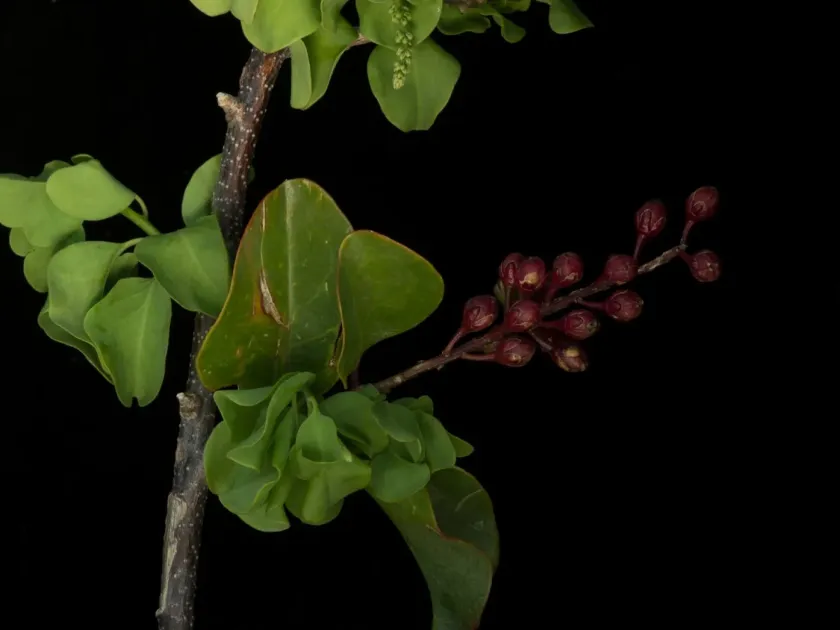
Description
Growing requirements
Stegnosperma cubense is a woody vine or upright shrub belonging to the monotypic family Stegnospermaceae. This tropical plant is native to the forested regions, forest edges, and coastal zones of the Caribbean Basin and Central America.
Botanically, the crop is defined by alternate, fleshy leaves with an elliptical shape and small white flowers arranged in racemose inflorescences. The fruit is a capsule that opens at maturity, revealing seeds with a bright aril, which facilitates their dispersal by birds.
Successful development of this plant requires high average daily temperatures and adequate sunlight exposure. In terms of agronomy, it is crucial to note that the plant does not tolerate prolonged frosts, making its cultivation suitable primarily for tropical or subtropical climatic zones.
Soil requirements involve well-drained, nutrient-rich substrates with a neutral or slightly acidic pH level. While the plant exhibits some tolerance to short periods of drought, it requires consistently moist soil to achieve optimal vegetative growth.
In terms of utilization, Stegnosperma is mainly used as an ornamental element in landscaping within regions that have a suitable climate. It also attracts scientific interest for breeders as a rare representative of its specific botanical family. Maintenance involves regular pruning to keep the shrub form or to control the growth of the vine.
Main diseases and pests
The primary threats to the development of Stegnosperma in cultivation are fungal diseases of the root system, which typically occur due to waterlogged soil. It is recommended to maintain a strict irrigation schedule to prevent water stagnation in the root zone.
Among pests, the most significant dangers are insects typical of tropical zones, including scale insects and spider mites. Control measures involve the application of appropriate insecticides and regular inspections of the leaf surfaces to identify potential infestations.