
Banisteriopsis caapi
Banisteriopsis caapi (Spruce ex Griseb.) C. V. Morton
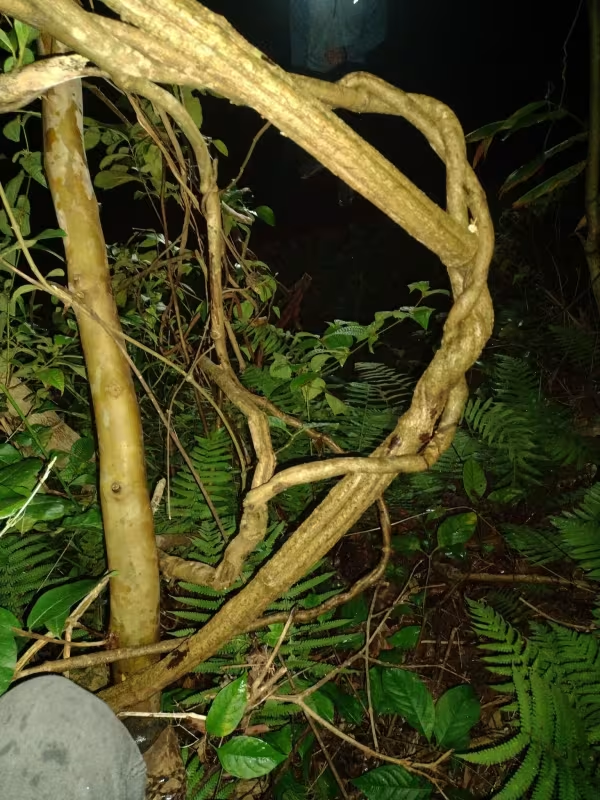
Description
Growing requirements
Banisteriopsis caapi is a prominent member of the Malpighiaceae family. It is a large, woody vine native to the Amazon rainforest, known for its rapid growth in tropical environments.
The cultivation of this plant requires a stable tropical climate with temperatures consistently above 22°C. It is highly sensitive to cold and cannot survive frost, making greenhouse cultivation the only viable option in temperate regions.
The soil should be nutrient-rich, organic, and well-draining. A pH range of 5.5 to 6.5 is ideal for nutrient uptake. A mix of peat, compost, and coarse perlite provides the necessary structure for healthy root development.
Light intensity should be high but filtered. In its natural habitat, it often competes for light, so providing a strong structural support system is essential for the vine to climb and reach maturity.
Maintaining high humidity is crucial for the plant's health. Frequent misting or the use of automated humidification systems is recommended to replicate the misty conditions of its native basin.
Main diseases and pests
Root rot caused by Oomycetes and various soil-borne fungi is the most significant threat to Banisteriopsis caapi, usually triggered by waterlogged substrate and poor aeration.
Spider mites are common indoor pests that thrive in dry environments. Monitoring the underside of leaves for fine webbing is a standard practice to detect early infestations.
Scale insects and mealybugs can also colonize the stems and leaf axils. Physical removal or horticultural oils are often preferred over heavy pesticides to protect the plant's delicate growth.
Nutritional deficiencies, specifically magnesium and iron, may appear as interveinal chlorosis. Regular testing of the growth medium is required to manage fertilizer application effectively.
Environmental stress, such as sudden drops in temperature or drafts, can lead to leaf drop. Ensuring a stable microclimate is the best form of protection against most common horticultural threats.