
Wilson mountain ash
Sorbus wilsoniana
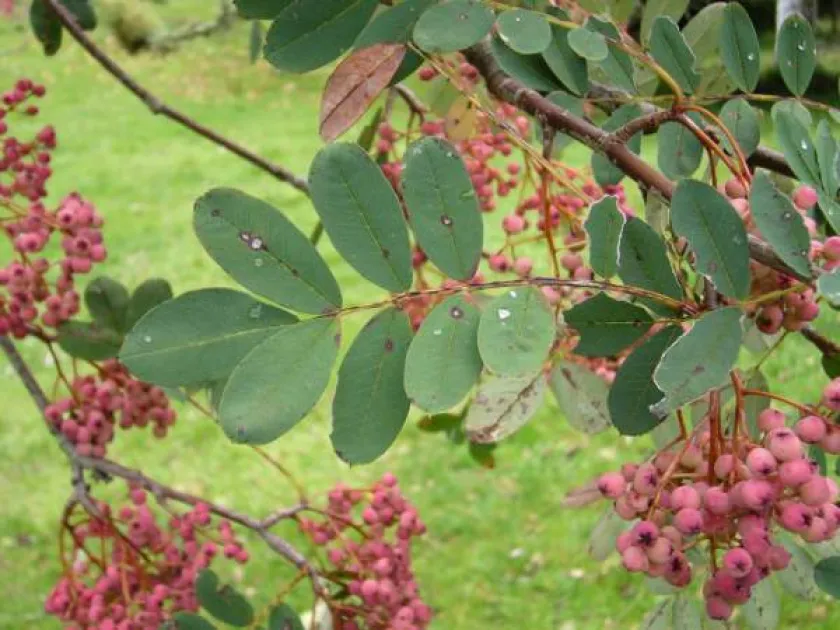
Description
Growing requirements
Wilson mountain ash (Sorbus wilsoniana) is a deciduous tree belonging to the Rosaceae family. Native to the mountain regions of China, this species is highly valued for its elegant habit and ornamental fruit display.
The tree thrives in locations with full sun to partial shade. It prefers deep, fertile, and well-drained soils. Ensuring adequate drainage is essential, as the roots are sensitive to prolonged waterlogging in heavy, clay-rich soils.
Regarding climate requirements, the species performs best in temperate zones. While it has moderate cold hardiness, young trees benefit significantly from winter protection, such as mulching the root zone to prevent frost heave.
Cultivation practices involve regular watering during establishment and dry spells. A light application of balanced fertilizer in early spring can promote healthy growth and enhance the overall vigor of the plant during the growing season.
In terms of usage, Sorbus wilsoniana is primarily used as an ornamental specimen in landscaping. Its seasonal changes, including white flowers and clusters of colorful berries, make it a focal point in residential gardens and public parks.
Main diseases and pests
Wilson mountain ash is susceptible to several common diseases, particularly fungal pathogens. Powdery mildew and leaf spot are frequently observed, especially in seasons with high humidity and limited airflow within the canopy.
Pest issues include aphids and various types of leaf-eating larvae. These insects can cause significant damage to the foliage and buds, leading to stunted growth if infestations are not controlled in a timely manner.
Effective management includes maintaining clean growing conditions, such as clearing away fallen leaves in autumn. This reduces the primary habitat for overwintering pests and fungal spores that could re-infect the tree next spring.
When chemical intervention is necessary, the use of insecticides and fungicides should be timed appropriately to coincide with early symptoms. Always apply treatments in accordance with environmental safety guidelines to protect local biodiversity.
Pruning is also an essential tool for disease management. By removing crowded or crossing branches, you improve air circulation and light penetration, which are critical factors in reducing the incidence of fungal outbreaks.