
Siloxerus humifusus
Siloxerus humifusus Labill.
Description
Growing requirements
Siloxerus humifusus is an annual herbaceous plant belonging to the Asteraceae family. It is a distinct species native to Australia, recognized for its specific physiological adaptation to arid and semi-arid environments.
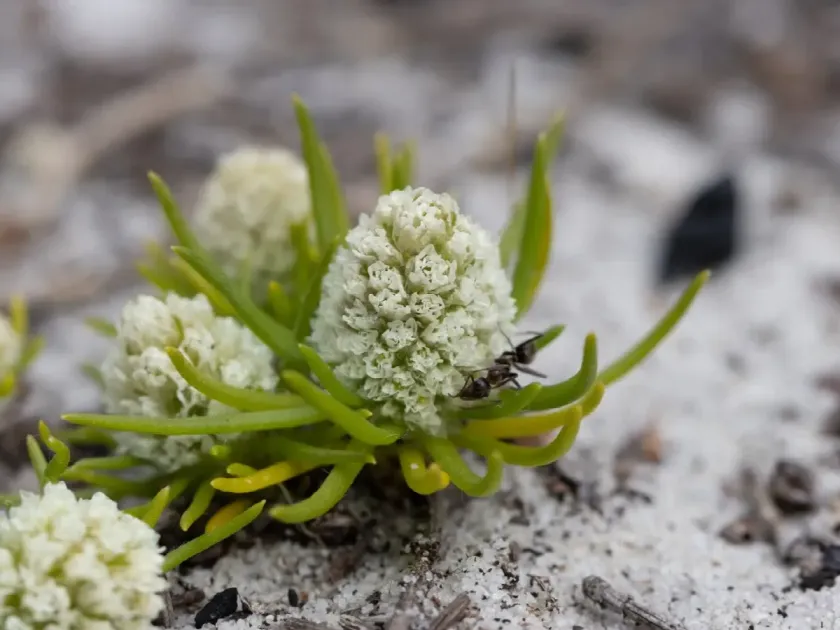
The plant exhibits a prostrate growth habit, which allows it to thrive in low-lying areas where moisture retention is critical. Its morphology is designed to optimize water usage in soils characterized by sand and gravel compositions.
Regarding climatic needs, this species demands high solar radiation and is adapted to the seasonal rainfall patterns typical of its range. It is essentially an opportunistic grower that emerges following favorable moisture cycles.
Soil requirements for Siloxerus humifusus include well-drained substrates. While it does not tolerate saline-alkaline soils, it performs adequately in low-nutrient, acidic to neutral soil environments found in native grasslands.
Agricultural management for this species is non-existent, as it occupies wild habitats. It contributes to the soil crust integrity in Australian pastoral regions, acting as a natural soil binder in open meadows.
Main diseases and pests
The main threats to the survival and spread of Siloxerus humifusus are related to land degradation caused by overgrazing, which removes the plant cover before it can produce sufficient seeds for the next cycle.
Pathogenic risks include fungal infections like mildew and root rot, which are triggered during humid conditions if the soil remains waterlogged for an extended period, preventing proper root respiration.
Insects and generalist pests can damage the reproductive organs of the plant, hindering the formation of healthy seeds and reducing the overall density of the population within its native habitat.
Invasive plant species pose a significant threat by competing for limited moisture and nutrients, especially in disturbed soil areas where the natural succession of native grasses is interrupted.
Climate change impacts, specifically the increasing frequency of extreme heat events and erratic rainfall, pose a high risk to the germination success of this annual species, threatening its long-term biodiversity value.