
Sideroxylon inerme
Sideroxylon inerme L.
Description
Growing requirements
Sideroxylon inerme, commonly known as the white milkwood, belongs to the Sapotaceae family. It is a robust evergreen tree native to coastal regions, primarily found in Southern Africa. This species is highly valued for its ability to withstand harsh coastal conditions, including strong salt-laden winds and sandy, nutrient-poor substrates.
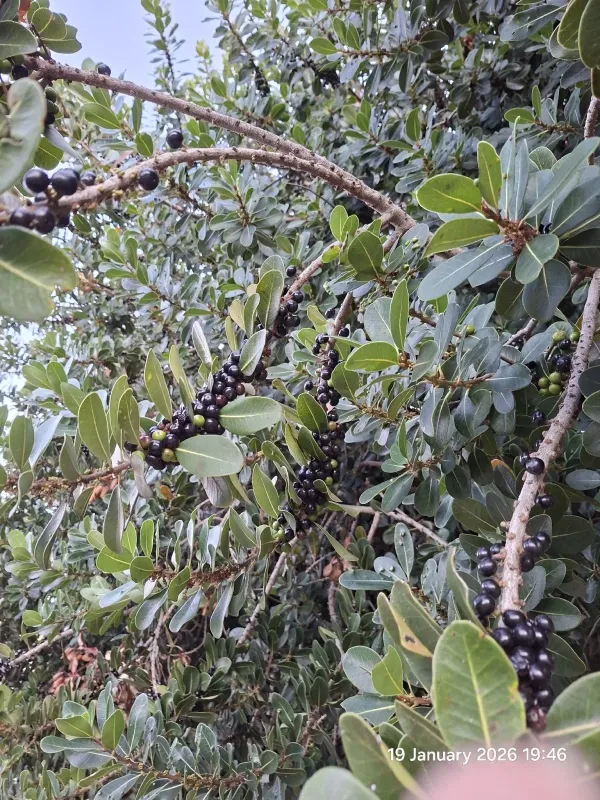
The tree typically grows to a height of 5 to 15 meters, featuring a dense, spreading crown with leathery, dark green leaves. The bark is dark grey or black and becomes scaly with age. Its small, sweetly scented flowers are white or creamy, appearing in clusters that eventually develop into edible, fleshy, dark-purple berries.
Regarding soil requirements, Sideroxylon inerme thrives in well-drained, sandy soils. While it can adapt to various soil types, maintaining good aeration is essential to prevent root zone saturation. It is a sun-loving plant that performs best in full sunlight or light shade, showing remarkable durability once established.
Cultivation practices focus on ensuring adequate moisture during the initial establishment phase. As the tree matures, it develops a deep root system that enhances its drought tolerance. Regular organic mulching helps preserve soil moisture and mimic the natural forest floor conditions necessary for healthy development.
The economic and ecological value of this tree is significant for coastal management. It is widely used in landscaping for windbreak creation and erosion control. Historically, its hard, dense wood was utilized for boat building and agricultural implements, though today the species is strictly protected in many regions.
Main diseases and pests
The main threats to Sideroxylon inerme include fungal pathogens linked to waterlogging and excessive moisture. Root rot is a common issue in poorly drained sites. Pests such as scale insects and aphids may colonize the foliage during stress periods, necessitating integrated pest management strategies.