
Shorea faguetiana
Shorea faguetiana
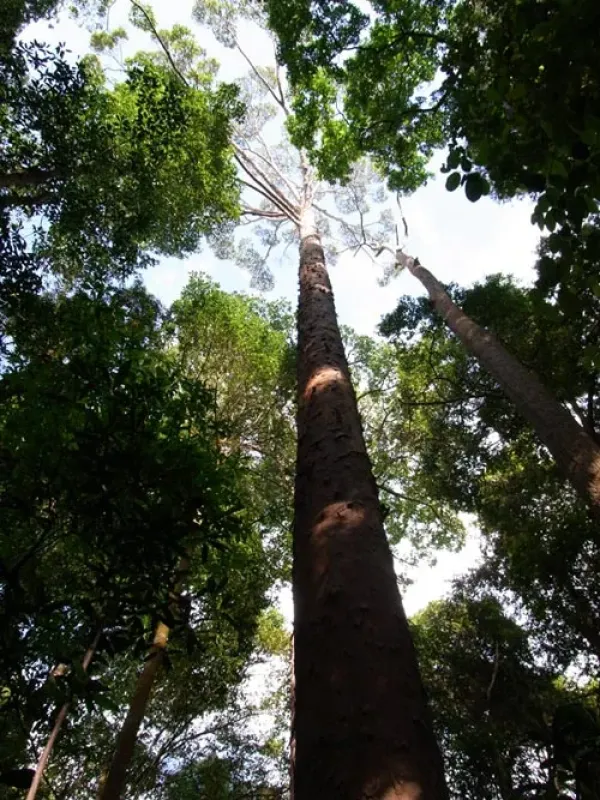
Description
Growing requirements
Shorea faguetiana is a monumental species belonging to the Dipterocarpaceae family. It holds the record as one of the tallest tropical tree species in the world, with documented specimens exceeding 90 meters in height, standing as giants in the canopy of Southeast Asian rainforests.
The native range of this species is primarily focused on the tropical regions of Borneo, the Malay Peninsula, and parts of Thailand. It thrives in deep, nutrient-rich soils that provide stability and moisture for its expansive root systems within the humid tropical climate.
The tree requires a warm and consistent climate, with optimal growth temperatures ranging between 24 and 28 degrees Celsius. Shorea faguetiana is highly sensitive to temperature fluctuations and cannot survive in regions that experience frost or significant seasonal temperature drops.
High relative humidity is a prerequisite for the survival and development of this species. In its natural ecosystem, the tree benefits from high annual rainfall, which sustains its physiological processes and ensures continuous growth in the nutrient-dense forest floor environment.
Attempting to cultivate Shorea faguetiana outside its natural ecosystem is extremely challenging due to its complex symbiotic relationships with soil fungi. Currently, research and cultivation efforts are focused on ecological restoration and maintaining existing forest stocks rather than commercial plantation farming.
Yield
The wood harvested from Shorea faguetiana is known as Yellow Meranti, a highly valued timber in the international trade. It is characterized by its durability, strength, and pleasant aesthetic, making it a sought-after material for high-quality furniture, construction, and interior finishing.
Sustainable forest management is critical for the utilization of this species. Because Shorea faguetiana grows slowly and requires many decades to reach maturity, logging is strictly regulated to prevent the depletion of populations and to ensure the longevity of the rainforest ecosystem.
Beyond its timber, the species is also a source of dammar resin. This natural product is harvested from the bark and has been used for centuries in various industrial applications, including the production of specialized varnishes, paints, and additives for the cosmetics industry.
The ecological output of these trees is far more significant than their commercial yield. As massive carbon sequesters, these trees play a vital role in regulating the global climate by storing large amounts of carbon dioxide within their trunks, branches, and root systems.
Future potential for the species lies in conservation genetics and breeding programs aimed at preserving the existing biodiversity. Improving the species' resilience to climate change is a key research area, although progress is limited by the tree's slow reproductive cycle.
Main diseases and pests
The most severe threat to Shorea faguetiana is habitat destruction driven by land conversion for agricultural use, particularly oil palm plantations. Deforestation fragments populations, making it difficult for the species to maintain genetic diversity and reproductive success.
Pest infestations, particularly by wood-boring beetles, can weaken trees during periods of environmental stress, such as extreme drought. While healthy forests can usually manage these pests naturally, stressed trees or those in fragmented areas are more susceptible to decline.
Root rot pathogens represent a significant biological threat, especially when soil drainage is disturbed by human activities. These infections can lead to the structural failure of the tree, which poses a long-term risk to both the individual tree and the local canopy structure.
- Massive deforestation and land-use change.
- Wood-boring insect infestations.
- Pathogenic fungal infections in the roots.
- Loss of genetic diversity due to population fragmentation.
- Climate-induced changes in humidity and precipitation levels.
Protection strategies are centered on preserving native forest corridors and implementing sustainable land management. Chemical interventions are largely avoided in these environments, as the priority is to maintain the health of the entire ecosystem rather than treating individual trees.