
Blue setchellanthus
Setchellanthus caeruleus
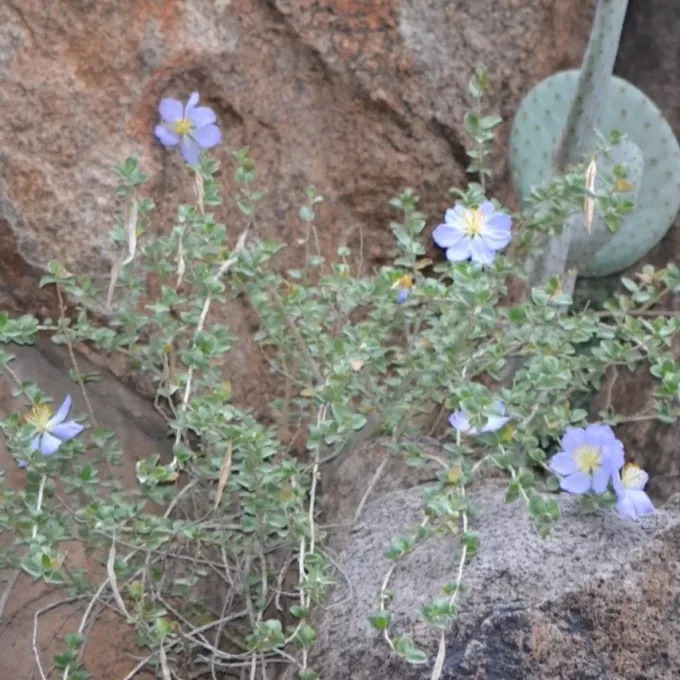
Description
Growing requirements
Blue setchellanthus (Setchellanthus caeruleus) is a unique, monotypic genus belonging to the Capparaceae family. This rare species is endemic to the arid regions of northern Mexico, specifically found within the desert landscapes of Coahuila.
The plant is biologically optimized for survival in extremely water-stressed environments. It thrives in well-drained, porous, and stony substrates, often avoiding competition by occupying niche habitats where other vegetation cannot persist due to low nutrient levels.
Botanically, it is defined as a small, woody shrub characterized by distinctive blue flowers that emerge during sporadic rainfall events. The plant's morphology includes succulent-like features that help regulate transpiration and maintain vital functions during prolonged periods of drought.
Agrotechnical requirements for this species are specific, as it demands high solar radiation and extreme heat for normal metabolic cycles. In cultivation trials, the primary challenge remains maintaining the precise balance of soil drainage and limited moisture required to prevent physiological root stress.
Current agricultural applications for this crop are strictly limited to scientific study and ornamental potential. It is considered a subject of interest for genetic research aimed at identifying drought-tolerance genes that could be transferred to more conventional agricultural commodities.