
Senecio herreianus
Senecio herreianus
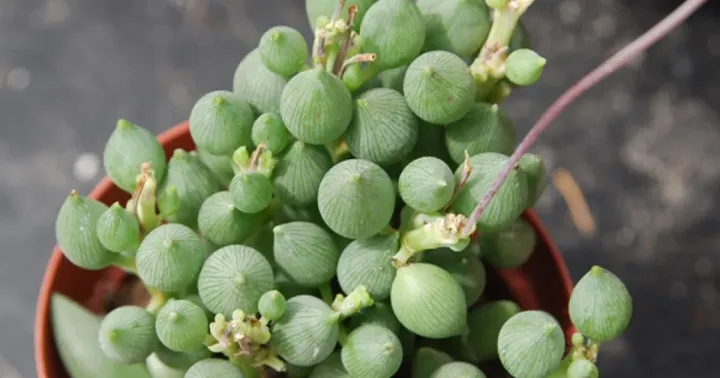
Description
Growing requirements
Senecio herreianus is a succulent perennial species belonging to the Asteraceae family. Originating from the arid regions of Southwest Africa, this plant has adapted to survive in environments where water availability is highly inconsistent.
The botanical characteristics include trailing stems adorned with specialized, bead-like leaves. These leaves function as water storage units, enabling the plant to maintain its physiological functions during extended drought periods typical of its native habitat.
Successful cultivation requires a well-draining, gritty soil mix. Growers are advised to use substrates enriched with perlite, coarse sand, or pumice to ensure that moisture does not remain trapped around the root system for too long.
The plant thrives in bright, indirect light conditions. In indoor or greenhouse settings, high light intensity is necessary to prevent the plant from becoming leggy and to ensure the dense, compact growth pattern that is characteristic of the species.
Temperature management is crucial, with an ideal range of 20 to 25 degrees Celsius during the active growth phase. During the dormancy period in winter, the plant should be kept in cooler conditions, preferably between 12 and 15 degrees Celsius, to allow for a period of rest.
Main diseases and pests
Mealybugs and spider mites are the most common pests affecting Senecio herreianus. These insects thrive in dry environments, making regular monitoring of the plants essential for maintaining crop quality in a production or nursery setting.
Root rot caused by overwatering or poor drainage remains the most significant threat to the plant's health. It is imperative to allow the substrate to dry out completely between irrigation cycles to avoid lethal fungal damage to the root system.
Powdery mildew may occur when there is poor air circulation combined with high humidity levels. Enhancing airflow around the plants and avoiding overcrowding are primary preventative measures against this fungal pathogen.
For chemical control, systemic insecticides and fungicides should be applied carefully, as succulent tissues can be sensitive to certain chemical concentrations. Always test on a small area of the plant before a full-scale treatment.
Maintaining a clean growing environment is vital for long-term health. By removing fallen debris from the soil surface and keeping tools sanitized, growers can significantly reduce the risk of secondary infections and pest infestations in their succulent collections.