
Sedeveria humellii
Sedeveria humellii
Description
Growing requirements
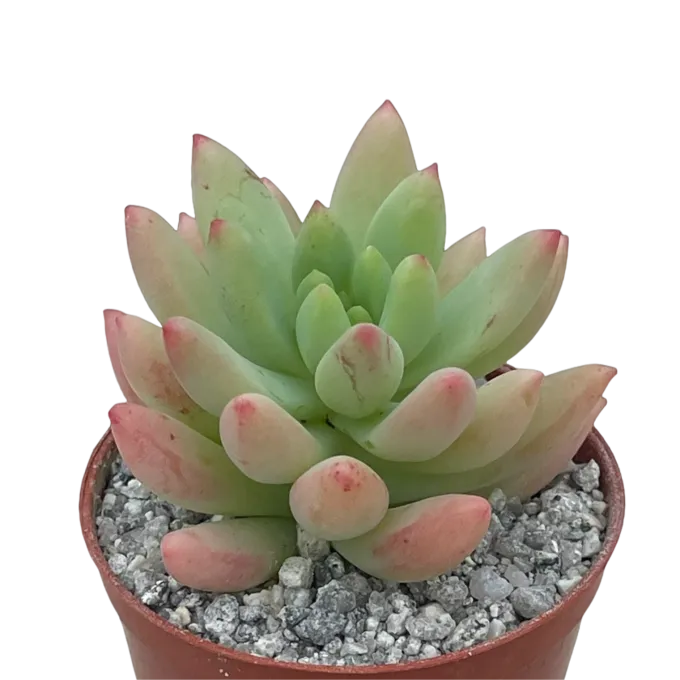
Sedeveria humellii is a popular intergeneric hybrid created by cross-breeding Sedum and Echeveria. Belonging to the Crassulaceae family, this succulent is highly valued for its rosette-forming foliage and high ornamental potential.
The plant originates from arid regions, which dictates its biological requirements. It thrives in well-draining soil and prefers high light intensity to maintain its compact shape and vibrant leaf coloration.
Optimal growth occurs in sandy or grit-based substrates with excellent aeration. Drainage holes in the container are mandatory to prevent the accumulation of water, which is the primary cause of plant failure in home cultivation.
Climatic requirements involve a cycle of active growth during warm months and a period of relative dormancy in winter. During the dormant phase, the plant should be kept in a cool location with minimal watering to simulate its natural environment.
Propagation is typically achieved through leaf cuttings or division of established rosettes. This method is efficient and allows for rapid multiplication of the culture in a greenhouse or nursery setting.
Main diseases and pests
The most significant threat to Sedeveria humellii is fungal decay caused by excessive moisture. Root rot is a common ailment that usually occurs when the soil remains waterlogged for an extended period.
Common pests include mealybugs, which lodge themselves between the leaves and at the base of the stem. These pests weaken the plant and can be difficult to eradicate without the use of systemic insecticides.
Spider mites are another concern, particularly in dry indoor environments with poor ventilation. They cause disfigurement of the leaves and can lead to severe stress for the plant if left untreated.
Cultural prevention is the best strategy against disease. Ensuring proper airflow and allowing the soil to dry out completely between waterings significantly reduces the risk of pathogens and fungal outbreaks.
Regular inspection of the plant's health is essential. If infestation occurs, the affected parts should be isolated or treated immediately to prevent the spread to other plants in the collection.