
Securigera virosa
Securigera virosa
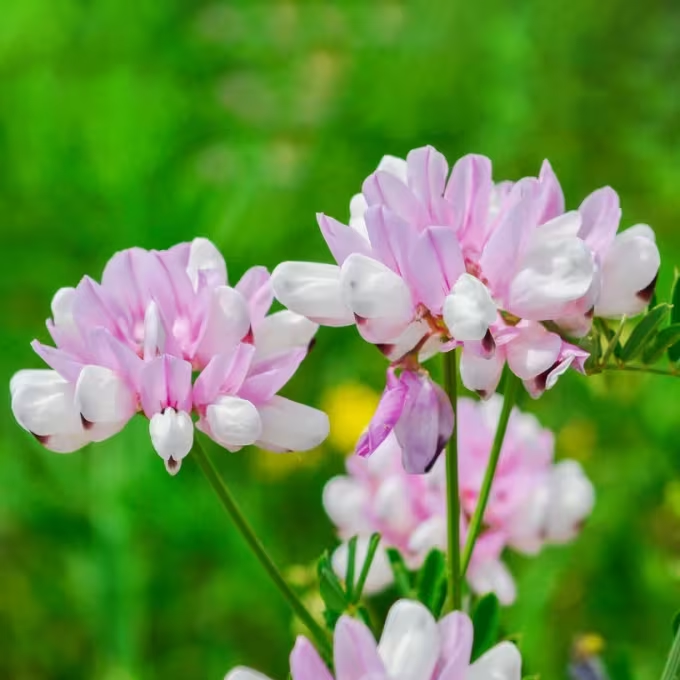
Description
Sowing dates
Sowing of this culture should take place in early spring once the soil temperature consistently reaches 8–10 degrees Celsius.
Seed scarification is highly recommended to overcome seed dormancy and ensure rapid, uniform emergence across the field.
Planting depth should be kept between 3 and 4 centimeters, depending on the moisture content and texture of the local soil.
Row spacing is typically set at 45 centimeters, which promotes better air circulation and reduces the pressure from competing weeds.
Proper compaction of the soil immediately after sowing helps maintain moisture contact around the seeds for improved germination rates.
Growing requirements
Securigera virosa is a member of the Fabaceae family, known for its significant drought tolerance and adaptability to harsh climates.
It prefers well-drained calcareous soils with a neutral pH, as these conditions are optimal for its root nodule development.
The plant is highly heliophilic, meaning it requires full sun exposure to maintain vigorous vegetative growth throughout the season.
Waterlogging is a major limiting factor for this crop, as excess moisture in the root zone quickly leads to decay and reduced plant vitality.
Its ability to fix atmospheric nitrogen makes it a valuable asset for sustainable crop rotations and improving overall soil structure.
Yield
The biomass yield is significantly influenced by effective weed management and the strategic application of fertilizers during growth.
Under optimal agricultural conditions, the crop produces a reliable amount of nutritious forage that is well-suited for livestock.
Strategic harvesting timing is crucial, as the protein content remains highest when the plants are cut during the early flowering stage.
Seed production performance varies but can be optimized by ensuring the plants are kept free from pest pressure during critical development phases.
Integrating potash and phosphate fertilizers into the soil management plan often leads to a visible increase in forage quality and harvest volume.
Main diseases and pests
Fungal infections, particularly those thriving in high humidity, represent the primary pathological risk to the health of the crop stands.
Nodule weevils are known to be significant pests, potentially causing substantial damage to the roots and slowing down plant maturation.
Powdery mildew can infect foliage when weather conditions fluctuate significantly, reducing the overall photosynthetic capacity of the plant.
Monitoring for insect outbreaks is a necessary practice, with treatment focused on target-specific, eco-friendly insecticide applications when needed.
Crop rotation remains the most effective prophylactic measure to break pest cycles and reduce the accumulation of soil-borne pathogens.
Harvesting
Forage harvesting is most effective during the peak flowering stage to achieve the best balance between digestibility and total dry matter.
Advanced mowing equipment allows for efficient processing, significantly reducing the drying time required for high-quality hay production.
Seed harvest requires careful timing, often waiting for 70-80 percent of the pods to turn brown to prevent premature shattering and yield loss.
Post-harvest management involves incorporating the remaining organic matter into the soil, which serves to enhance long-term soil fertility.
Proper storage of dried hay in temperature-controlled facilities is vital to prevent the loss of nutrients and ensure long-term shelf stability.