
Satin Pothos
Scindapsus pictus Hassk.
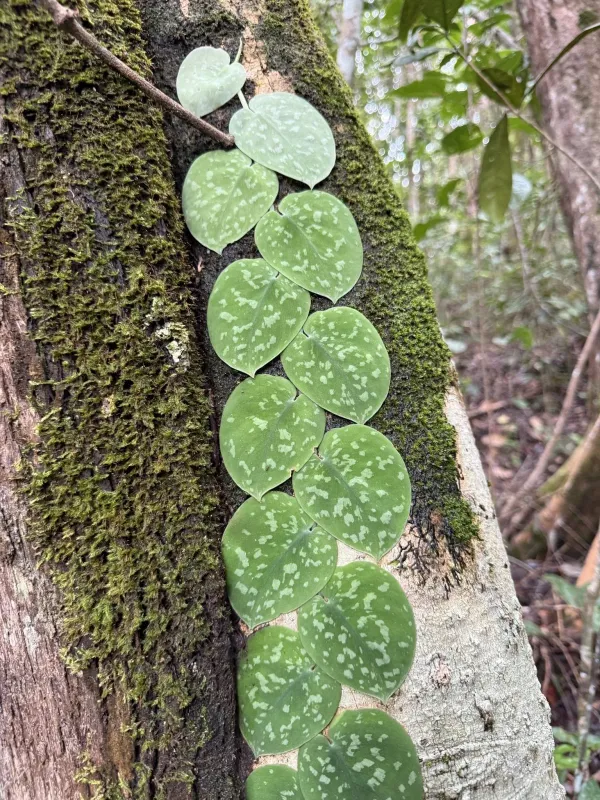
Description
Growing requirements
Satin Pothos (Scindapsus pictus) is a prominent member of the Araceae family, native to the tropical rainforests of Southeast Asia. This species is characterized by its trailing growth habit and is primarily cultivated as a decorative ornamental plant in interiors.
Botanically, it is an evergreen vine with lanceolate to ovate leaves. The foliage is noted for its distinctive silver-grey variegation on a deep green backdrop. The stems are capable of producing aerial roots, which allows the plant to climb in its natural environment.
The crop requires bright, indirect lighting to maintain the intensity of its leaf pattern. Temperatures ranging between 20°C and 25°C are considered optimal for vegetative growth, while excessive fluctuations should be avoided during the dormancy period.
Soil requirements involve a well-draining substrate rich in organic matter. A mixture of peat, perlite, and pine bark is recommended to ensure proper aeration for the root system, as this species is susceptible to root rot if left in waterlogged conditions.
Agricultural management includes regular watering after the top centimeter of soil has dried out. Maintaining high ambient humidity is crucial, especially in indoor environments, to ensure the health of the foliage and prevent leaf margin browning.
Main diseases and pests
Pest management is a critical aspect of maintaining plant health. Common threats include spider mites, mealybugs, and scale insects, which frequently target the stems and the undersides of the leaves, sucking sap and causing yellowing.
Disease pressure is largely associated with improper irrigation practices. Root rot is a common occurrence if the substrate remains constantly wet, leading to decay of the stem base and overall plant decline, which requires immediate repotting.
Effective control methods involve periodic monitoring and the application of horticultural oils or systemic insecticides. Providing good air circulation around the plants significantly reduces the risk of fungal outbreaks in confined environments.
Propagation is most efficiently achieved through stem cuttings. This practice is essential for commercial nurseries looking to mass-produce healthy, disease-free starter plants during the active growing season.
In terms of agricultural use, Scindapsus pictus is widely utilized in the horticultural sector for indoor landscaping and air purification. Its ability to adapt to varying light levels makes it a versatile crop for interior designers and residential growers alike.