
Sciaphila tenella
Sciaphila tenella
Description
Growing requirements
Sciaphila tenella is a rare herbaceous mycoheterotrophic plant belonging to the Triuridaceae family. Unlike conventional agricultural crops, this plant lacks chlorophyll and does not engage in photosynthesis to produce its own energy.
The plant thrives exclusively through a symbiotic relationship with specific fungi, obtaining nutrients from them within the soil. Because of this specialized strategy, it is not cultivated as a crop but serves as an important bio-indicator for healthy tropical forest ecosystems in the Americas.
Optimal growth requires very specific soil conditions characterized by high organic content and an active, established fungal network. Any attempt to cultivate this species artificially remains unsuccessful because it is nearly impossible to replicate the required soil microbiome in a controlled environment.
The species is found primarily in shaded, humid habitats on the forest floor where sunlight is limited. Intense light can be harmful to the plant's delicate structures, as its physiological functions are adapted to deep shade conditions.
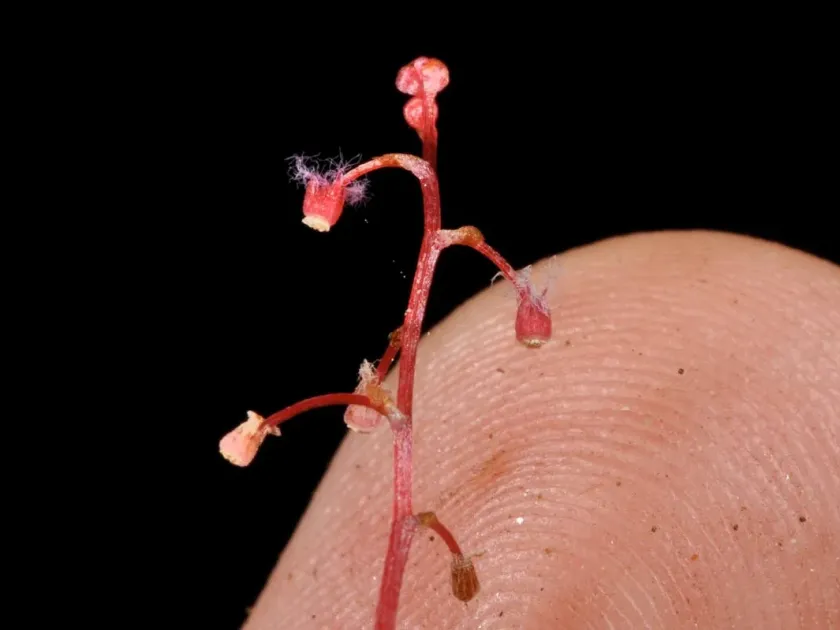
Botanically, the plant is characterized by extremely slender, translucent stems and tiny scale-like leaves. Its reproductive phase is synchronized with local rainfall patterns, producing miniature inflorescences that emerge from the leaf litter once the necessary nutrient threshold from its fungal partner is reached.