
Schistostega pennata
Schistostega pennata
Description
Growing requirements
Schistostega pennata, commonly known as goblin gold, is a unique species of moss belonging to the Schistostegaceae family. While it is not a cultivated agricultural crop, it remains a subject of intense scientific interest due to its fascinating biological adaptation to extreme light conditions.
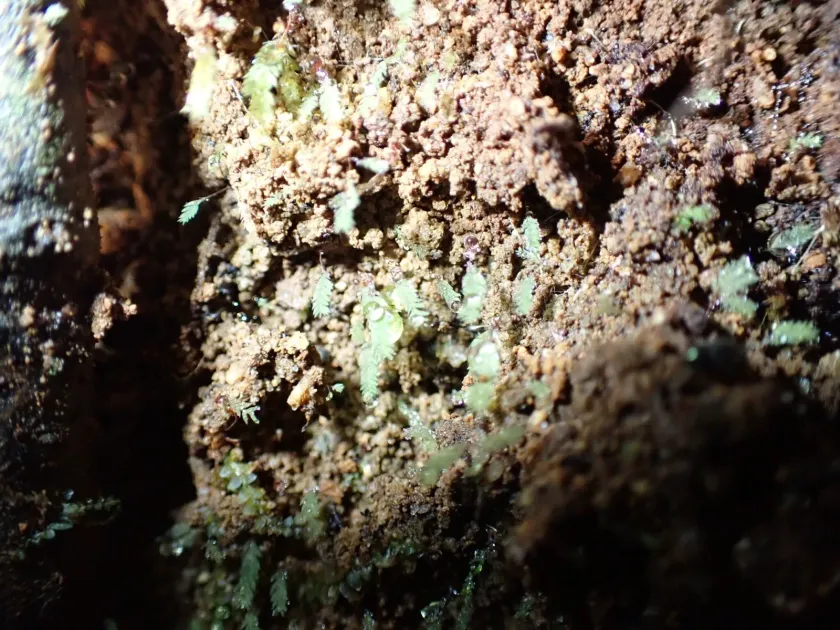
The plant is native to the Northern Hemisphere, found in temperate forest zones. Its habitat is strictly confined to highly shaded environments, such as the undersides of tree roots, rock crevices, and cavern entrances where light levels are too low for most other photosynthetic organisms.
Its botanical signature is the protonema, which consists of lens-shaped cells. These cells concentrate faint light, allowing the moss to photosynthesize effectively in the dark. This refraction creates a distinctive, glowing green appearance, earning it the common name "goblin gold."
Optimal growth requirements include high atmospheric humidity and constant cool temperatures. The moss is extremely sensitive to desiccation and direct sunlight. It thrives on acidic, decaying woody substrates found in protected forest niches.
There is no commercial agricultural practice for Schistostega pennata, as the species is essentially impossible to cultivate in traditional farming settings. Its growth is strictly regulated by natural forest succession, and in many jurisdictions, it is considered a protected biological asset.
Main diseases and pests
The primary threats to Schistostega pennata populations are habitat destruction and deforestation. Any significant alteration to the forest canopy or the moisture level of the understory quickly leads to the local extinction of this fragile species.
Pollution and changes in soil chemistry also present major risks. As an indicator species, it is highly sensitive to environmental degradation, which hinders its ability to reproduce via spores and colonize new, suitable surfaces.
Physical disturbances such as excessive human foot traffic or the removal of fallen logs and leaf litter can devastate a colony, as the moss relies on stable, undisturbed substrates to maintain its protonemal structure.
Climate change poses a long-term threat by increasing the frequency of drying events in forest microclimates. As the humidity levels fluctuate, the moss loses its ability to sustain the specialized light-refracting cells.
Preservation efforts are focused on the protection of old-growth forest areas. Maintaining the integrity of these microhabitats is the only effective way to prevent the decline of this rare and scientifically significant bryophyte.