
Savignya parviflora
Savignya parviflora
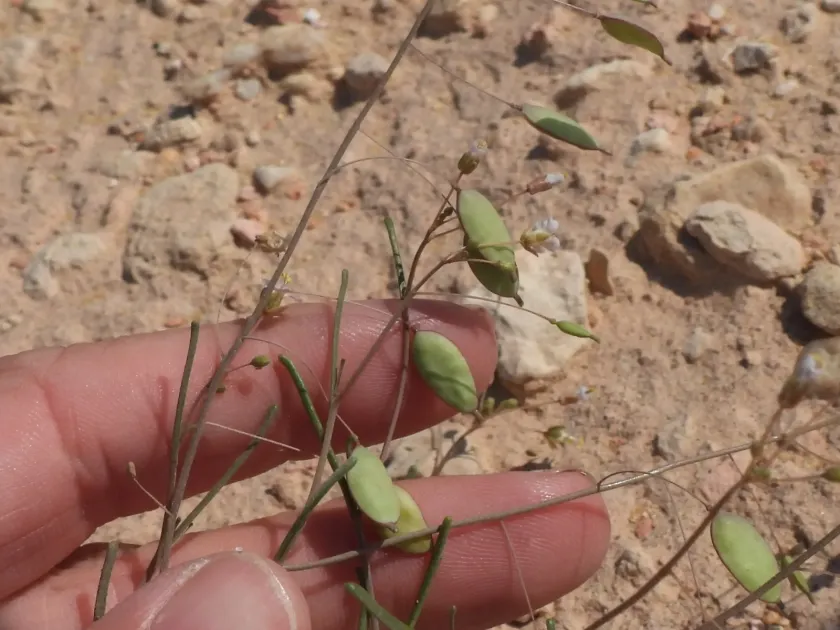
Description
Sowing dates
Savignya parviflora is a flowering plant belonging to the Brassicaceae family. It is native to the arid environments of the Middle East and North Africa, where it has evolved to thrive in harsh, water-limited conditions.
Botanically, it is characterized by its ability to complete a rapid life cycle, making it well-suited for regions with short, unpredictable rainy seasons.
Sowing should ideally occur at the onset of the cool, moist season. Proper seed placement at a shallow depth of approximately 1 to 2 centimeters is crucial to ensure germination before the surface soil dries out.
Density management is essential to minimize competition for moisture. Wide spacing between rows is recommended to allow each plant to establish a deep taproot, which is necessary for survival during dry periods.
As an adaptive desert species, the crop shows high seedling vigor, allowing it to quickly establish itself before environmental stressors become severe.
Growing requirements
The crop thrives in well-drained, sandy, or light loam soils. Proper soil aeration is critical, as the roots are highly susceptible to rot in stagnant or waterlogged conditions.
Full sun exposure is a non-negotiable requirement for the photosynthesis and healthy development of this species; any shade will lead to stunted growth and reduced seed set.
Savignya parviflora is notably tolerant to soil salinity, allowing it to be integrated into cropping systems on marginal lands that are unsuitable for traditional vegetable production.
Regarding temperature, the plant prefers moderate conditions during its vegetative phase, though it can withstand significant heat once the reproductive stage is initiated.
Nutrient requirements are generally low; however, a balanced, low-concentration fertilizer application during the early vegetative phase can significantly enhance biomass production.
Main diseases and pests
The primary diseases affecting this crop are fungal pathogens, specifically downy mildew, which thrives under high humidity conditions and poor ventilation.
Bacterial soft rots can also become problematic if the soil moisture levels are not strictly managed, especially during periods of unseasonal rain.
Among the insect pests, cruciferous flea beetles are the most significant threat, capable of causing substantial damage to young, tender foliage.
Aphid infestations are also common, particularly during the flowering stage, potentially compromising the overall yield and seed quality.
Integrated pest management, including regular field monitoring and the use of resistant varieties where available, is recommended to mitigate these risks effectively.